
The theme of the day was change.
When I began this project five years ago, photographing public spaces, demonstration gardens, and native preserves, my son was four years old. I dragged him along to nearly every location. “Are we going to one of my parks or one of Daddy’s parks?” became a frequent question. I wanted him to appreciate places like Arlington Garden and Eaton Canyon, but to him the essential problem was obvious: these parks did not have playgrounds.
It felt fitting, then, that I was bringing him along for this reboot of the project, five years later. As we drove, memories of our excursions flooded back to me. I kept asking whether he remembered this place or that one. Mostly, he didn’t.
This is a kid who rarely forgets a detail, yet he had apparently erased some of my fondest memories from the years we spent exploring together during the pandemic. Of course, he was very young. Those outings belong more fully to my memory than to his.
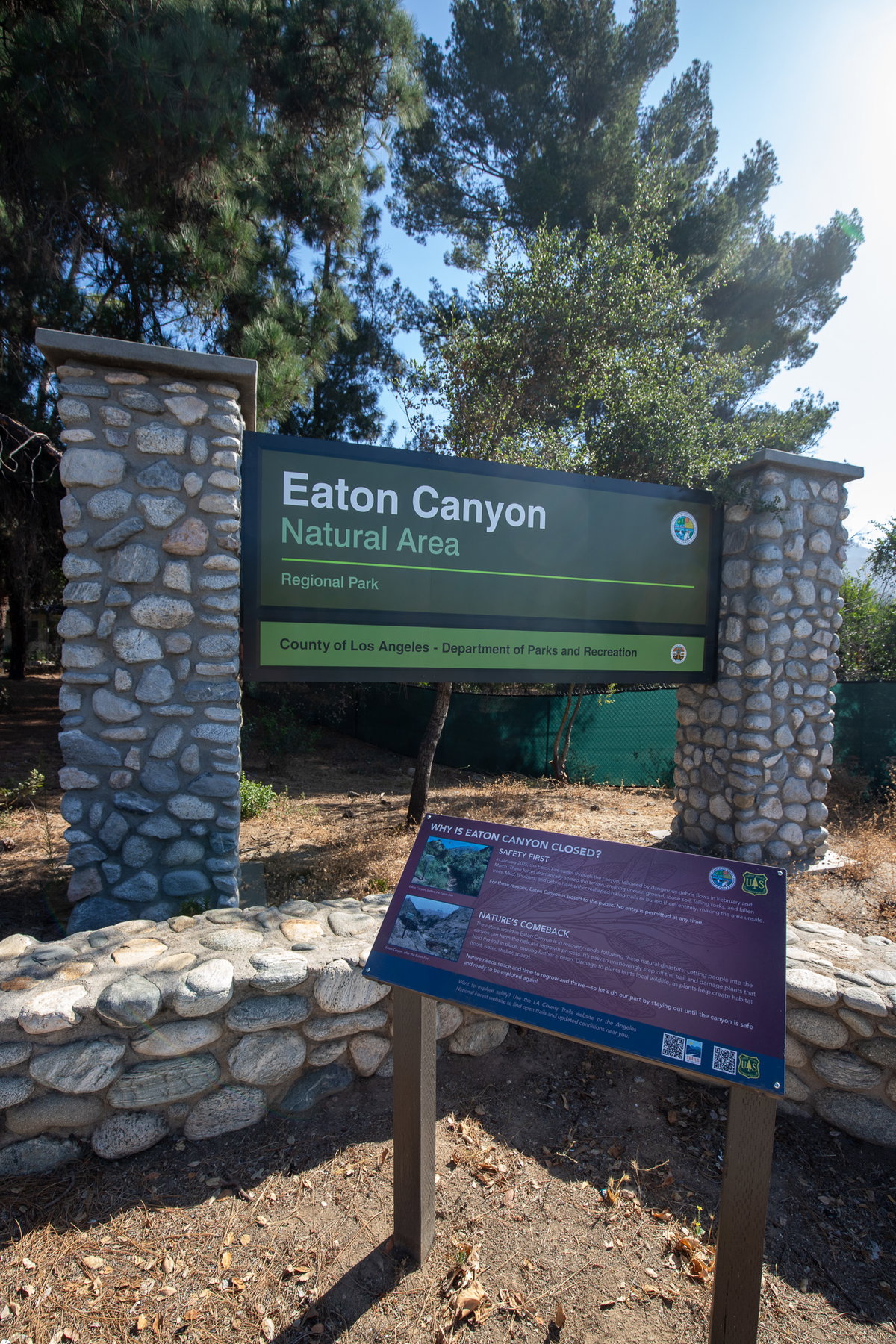
Eaton Canyon was different. Despite the relative shortage of photographs I took there, it was a place we had visited many times. In both a physical and cultural sense, the canyon is one of Altadena’s defining features.
For our family, it was a place for familiar hikes. It was where my son first went hiking with friends and, encouraged by them in ways I could never quite replicate, finally pushed all the way to the waterfall. We explored the nature center together. I taught him to recognize scrub oak, coast live oak, tree tobacco, poison oak, and California sagebrush.
Only a few months before the Eaton Fire, the two of us camped at Millard Trail Camp, a small hike-in campground without piped water or many of the amenities associated with a developed campground. We found it comfortable enough that we immediately began planning a return trip with my wife. It was almost perfectly situated: close enough to home that we could decide to go, set up camp without much fuss, and still feel as though we had gotten away.
The fire came before we could return.
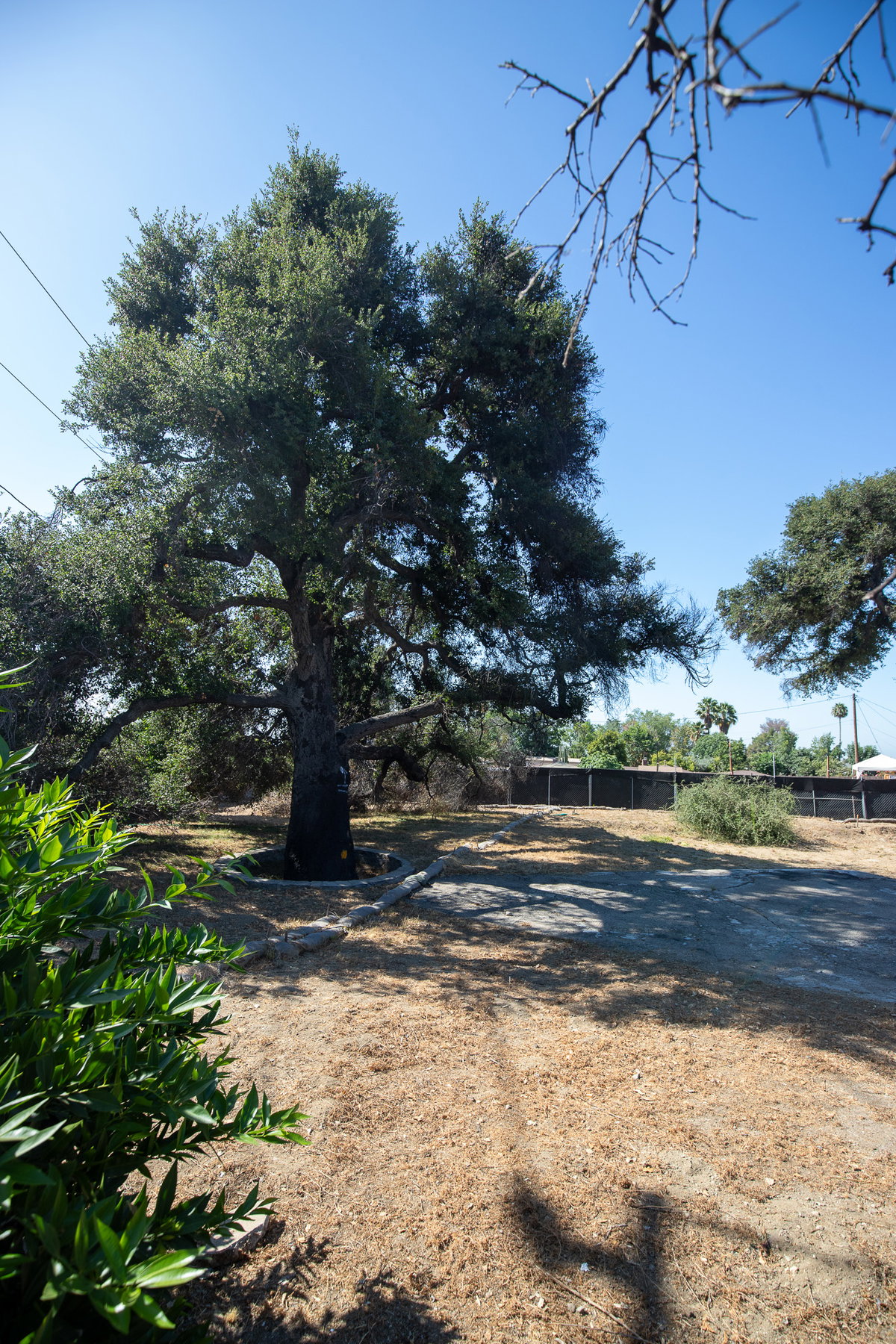
At this point, I could talk about renewal, about fire as part of a natural cycle, seedlings emerging from ash, and the earth healing itself. It is not that I disbelieve any of that. But Eaton Canyon was not merely an ecosystem viewed from a safe intellectual distance. It meant a great deal to my family, and it must have meant vastly more to the people who lived around it.
Altadena does not simply sit beside the canyon. In places, the neighborhood seems almost immersed in it. While walking through the area, I caught an unexpectedly strong whiff of what I can only call the mountain smell: pine, damp organic matter, rock, and clean air. You know it immediately when you encounter it. It seems to reach some part of the body before the mind has time to identify it.
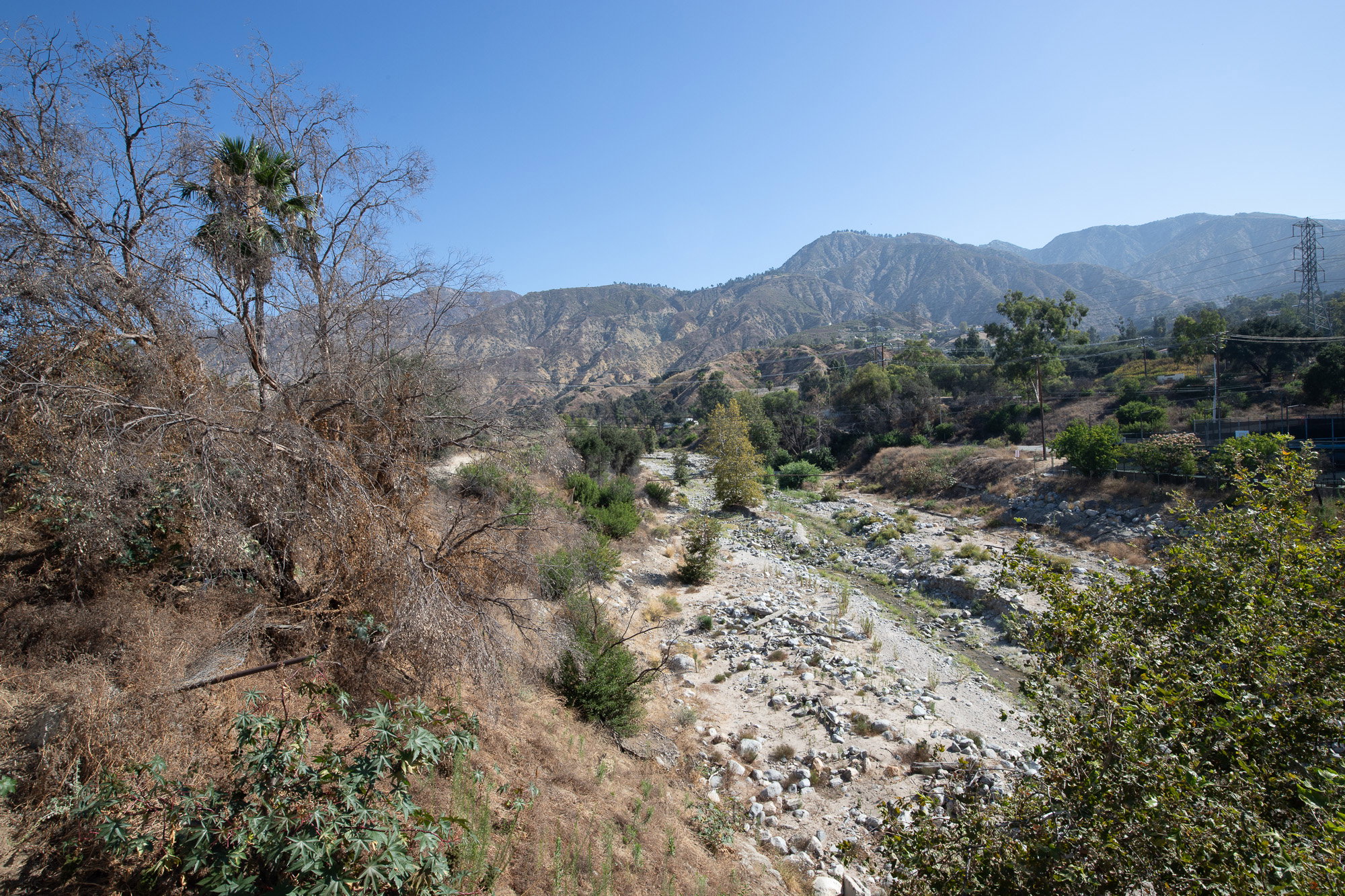
The change to Eaton Canyon is also more complicated than the simple fact that a fire burned through it. Fire altered the vegetation, but the loss of that vegetation changed the soil. Then the rains came. Trails shifted or disappeared beneath debris. Slopes that had once been held together by roots became unstable.
One of my goals for the outing was to understand why the canyon remained closed over a year later. Before looking into it, I suspected institutional delay. Perhaps the agencies responsible were dragging their feet, or perhaps reopening the canyon had simply fallen behind other priorities.
Instead, the explanation appears to be both ecological recovery and public safety. The fire was followed by debris flows that left loose soil, fallen trees, unstable rock, and trails that had been reshaped or buried. The closure is meant to protect visitors while also keeping them from trampling the fragile regrowth now holding the damaged ground together.
As a gardener, I understand the vulnerability of young growth. A seedling can appear vigorous and still be destroyed by a misplaced footstep, a little too much sun, or one afternoon without water. Here, however, the stakes are larger. The plants are not merely returning to the landscape. In some places, they are what will eventually make the landscape stable again.
The danger is not theoretical. In May, a hiker died after falling roughly thirty feet from a fixed-rope section of the Mount Wilson Trail. The mountains may look familiar from below, but the ground within them is not necessarily the ground people remember. Before the fire, that section wasn’t even roped.
The loss of the Eaton Canyon trail is something the entire community must feel. For my family, it was the dependable hike we could choose on an otherwise empty Saturday or Sunday morning. We could go alone or invite friends and make an occasion of it. It was my son’s first substantial hike with other children and, because they encouraged him through the difficult parts, the longest hike he had completed at the time.
I have hesitated to write too deeply about Altadena after the fire because it does not feel entirely like my story to tell. I was always a visitor: someone who came for a morning to borrow the community’s mountain, then perhaps stop for tacos at HomeState, ice cream at Carmela, or perhaps take the opportunity to pick up some produce and barbari bread from Super King on the way home.
Even on this outing, I came primarily for the canyon. The canyon belongs, in some sense, to everyone who loves and uses it. But once I began moving through the surrounding streets, it became impossible to separate the landscape from the people living beside it.
At moments, I worried that I was becoming exactly what I did not want to be: someone gawking at another community’s tragedy. I found several places with clear views into the canyon and encountered neighbors while taking photographs. I use a full-sized camera rather than a phone, which now seems more conspicuous than ever. I was aware of myself standing there, framing the damaged mountains through a viewfinder.
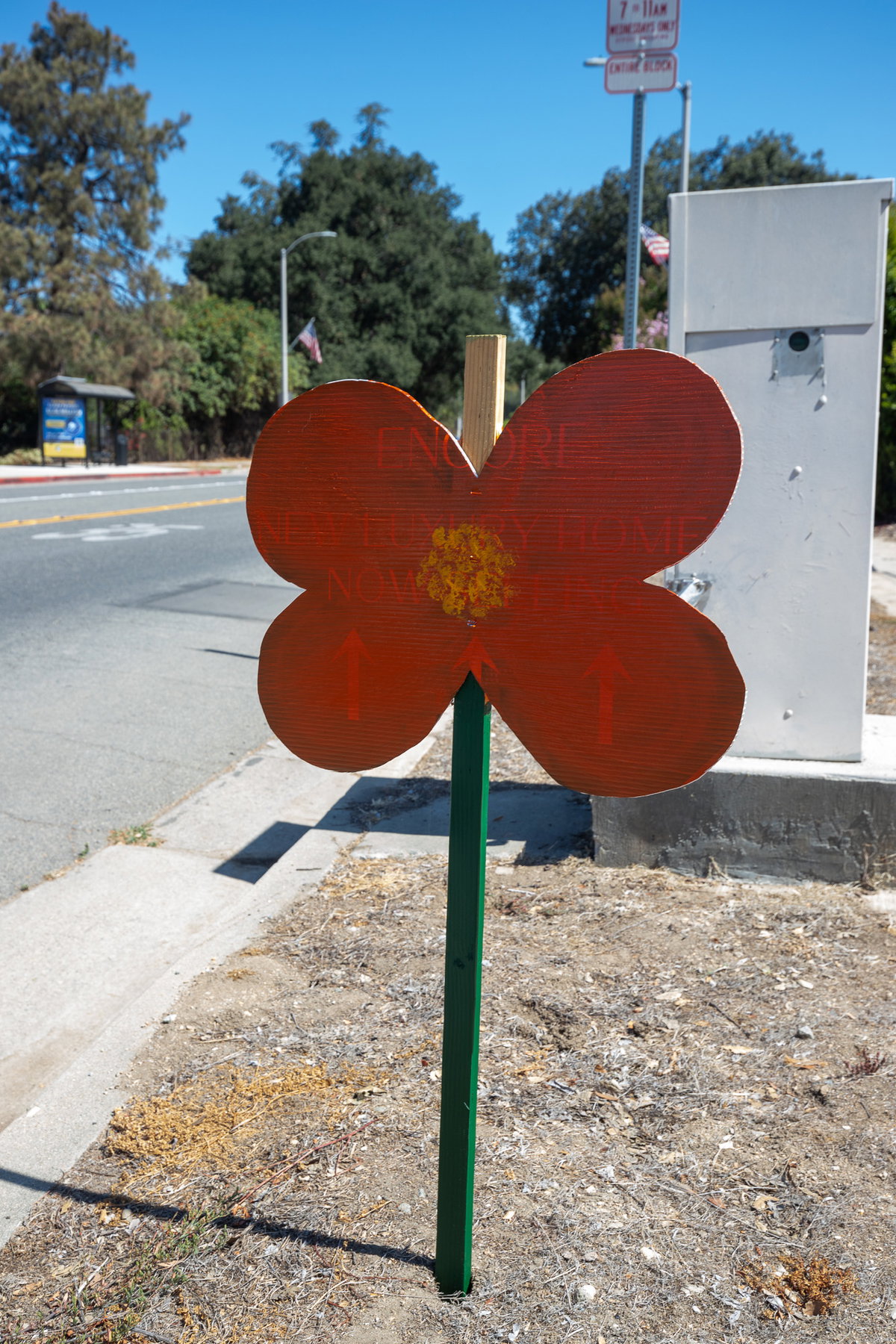
I photographed the signs: Dena Strong. Saving Altadena’s At-Risk Trees. We’re Not Selling. Poppies fashioned from marketing waste stood in the dry grass. I greeted a few people as they passed, hoping I did not appear to them like a vulture searching for images of destruction.
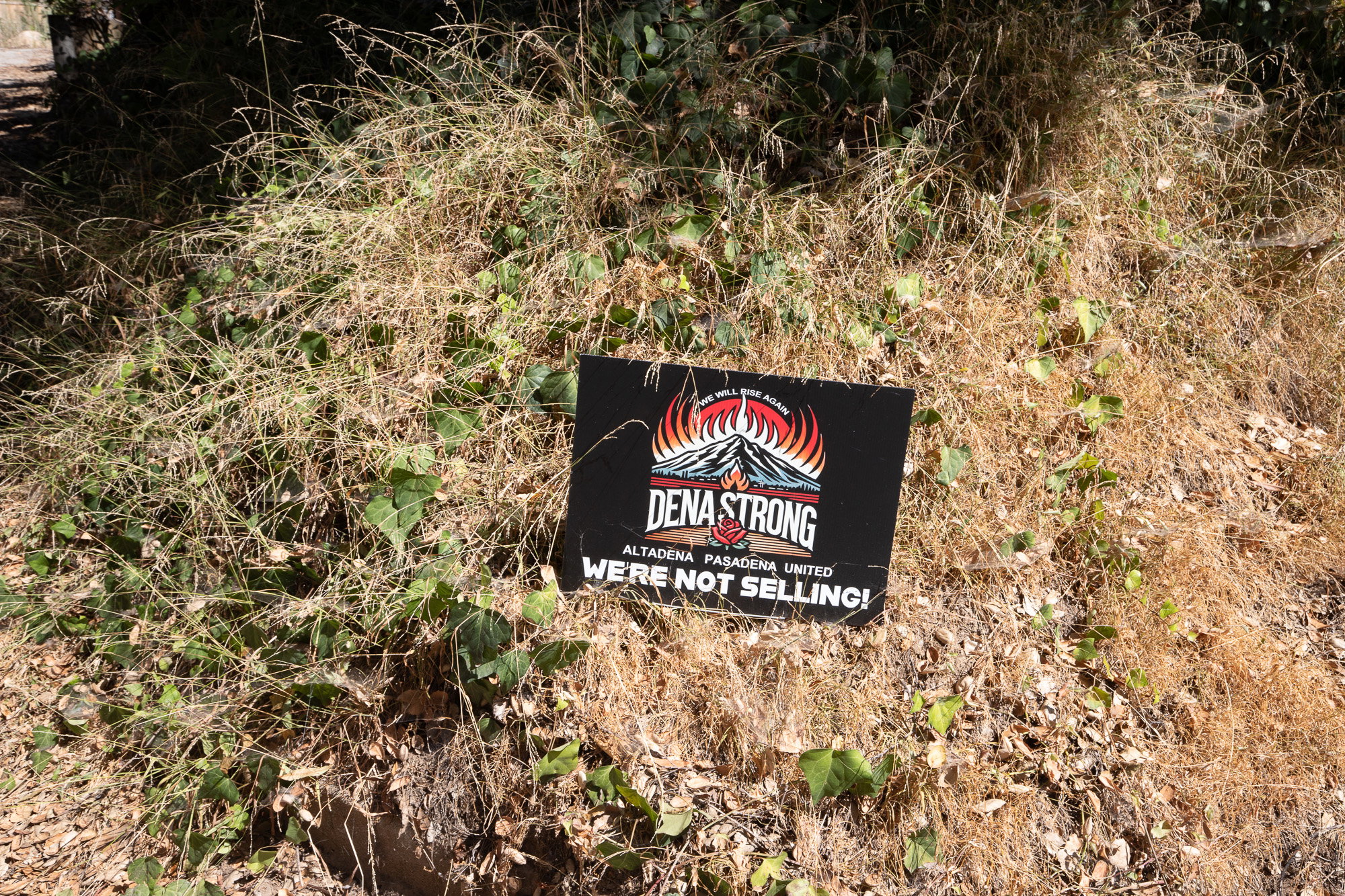
But ignoring those things would have been another form of dishonesty. The canyon’s beauty does not stop at an administrative boundary. It bleeds into the neighborhood, just as the neighborhood reaches back into the canyon.
That imperfect transition between nature and city is precisely what makes Altadena compelling to me. It is also closer to how I think cities ought to work. I do not believe human beings were ever truly meant to leave nature behind. Our separation from it feels more like an accident of history: walls and pavement made life easier and safer, but eventually they also allowed us to forget what fresh air does to the senses and how deeply the body responds to trees, water, soil, and open space.
Once I began thinking in those terms, I took a few steps farther into the neighborhood. I looked for the places that might give the canyon context rather than merely provide a view of it. There were apartment buildings under construction and houses partly, but not yet fully, rebuilt. Hammers rang through the streets. Men worked on rooftops beneath the blazing sun.
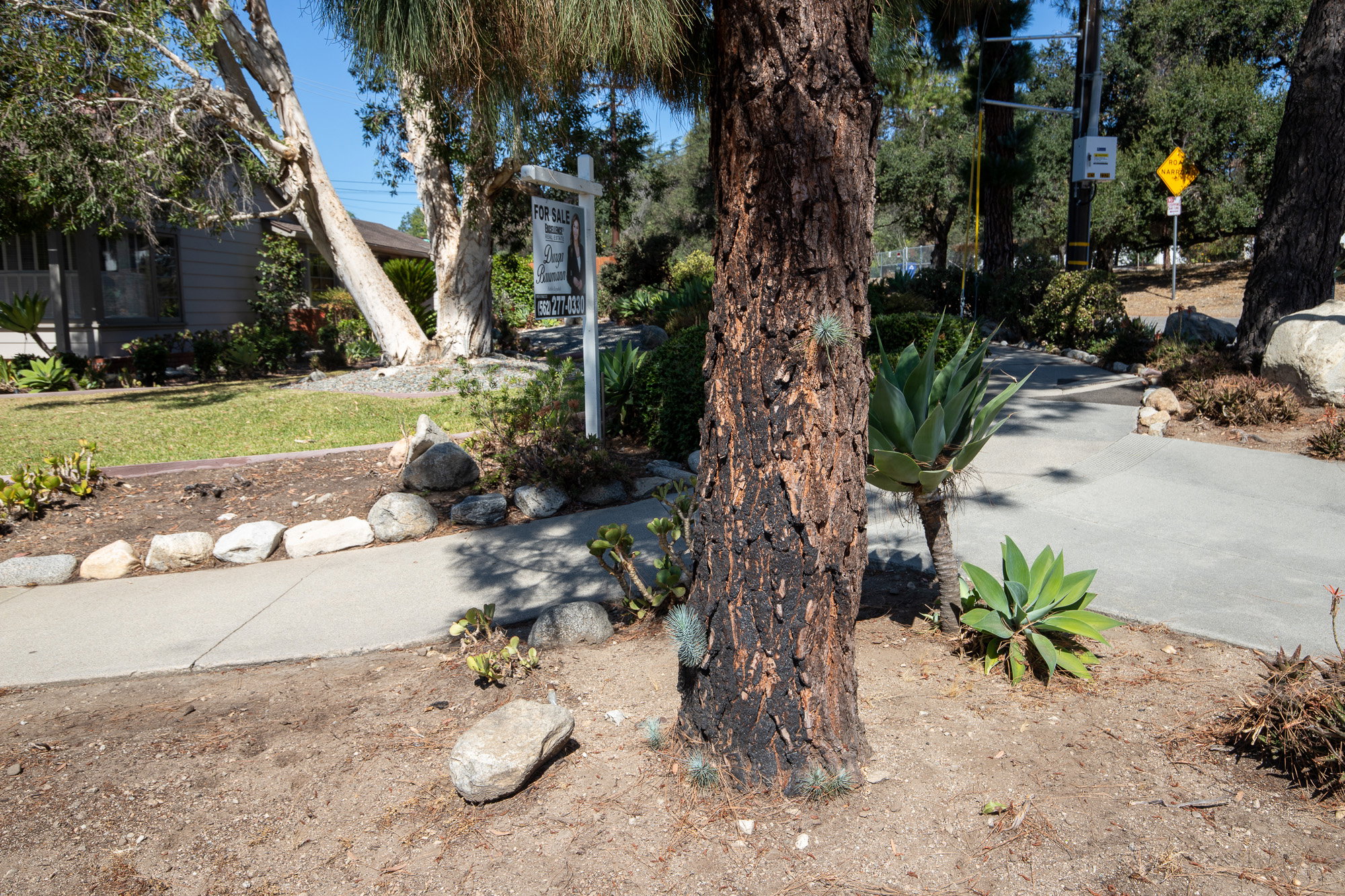
Change was no longer an abstract theme. It was audible.
The Library
From the canyon, I drove to the Bob Lucas Memorial Library. I had chosen it partly because it was nearby, but it was only after I started the trip that I realized it offered another view of the same community, and another kind of change.
I remembered the library fondly from my earlier visit. It had a modest native garden in front, a recycled permeable path, an open entrance, and a large Brazilian pepper tree. Behind the building, in the parking lot, there was a vegetable garden.
When I learned that the library had been expanded and renovated, I felt a moment of panic: Had they destroyed the garden?
What I found was, for the most part, positive. A brightly colored mural now runs along the rear wall, carrying messages of hope, resilience, and community. The old vegetable beds is no longer there. It seemed neglected before anyway. The compost bins remained and the bed was replaced by native plants. Most importantly to me, the native landscape in the front was not treated as expendable.
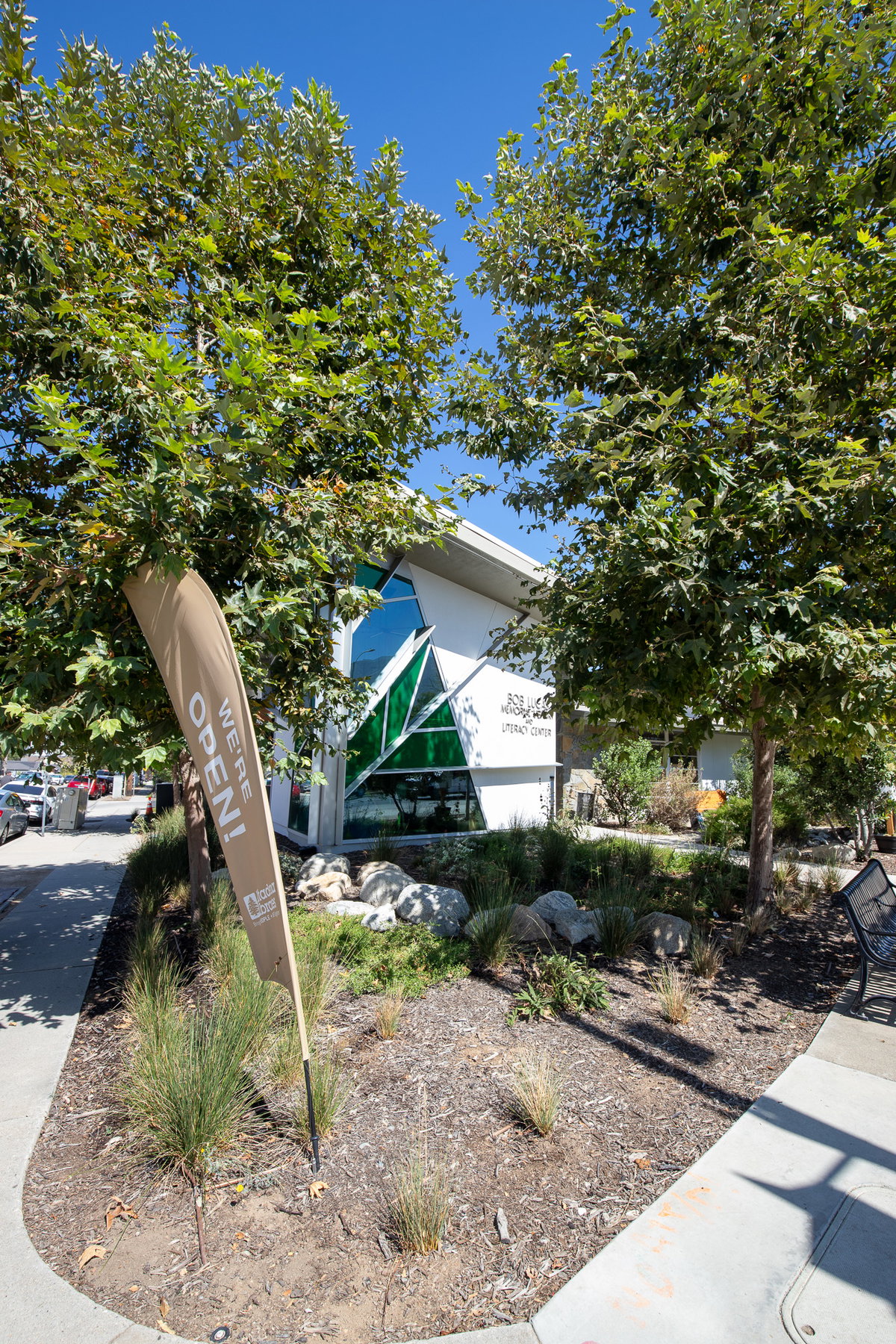
Instead of functioning as an exhibit confined to the front of the property, the garden now wraps around the building. It has become the library’s landscape rather than simply an attraction placed beside it. The old Brazilian pepper tree is gone and two handsome sycamores now occupy the front garden.
To be honest, I do not love the architecture of the renovated building. I am not entirely sure what the diagonal lines and lime-green glass are meant to accomplish. Perhaps the green was intended to evoke the natural setting, but it reads more like a would-be space-age green—a cheap attempt to announce that the building is modern.
Before the renovation, the library was more restrained and cottage-like. Some people may have considered it homely or dated, but did the design have to swing quite so far in the opposite direction? The most generous description I can offer is: corporate office park meets neighborhood library.
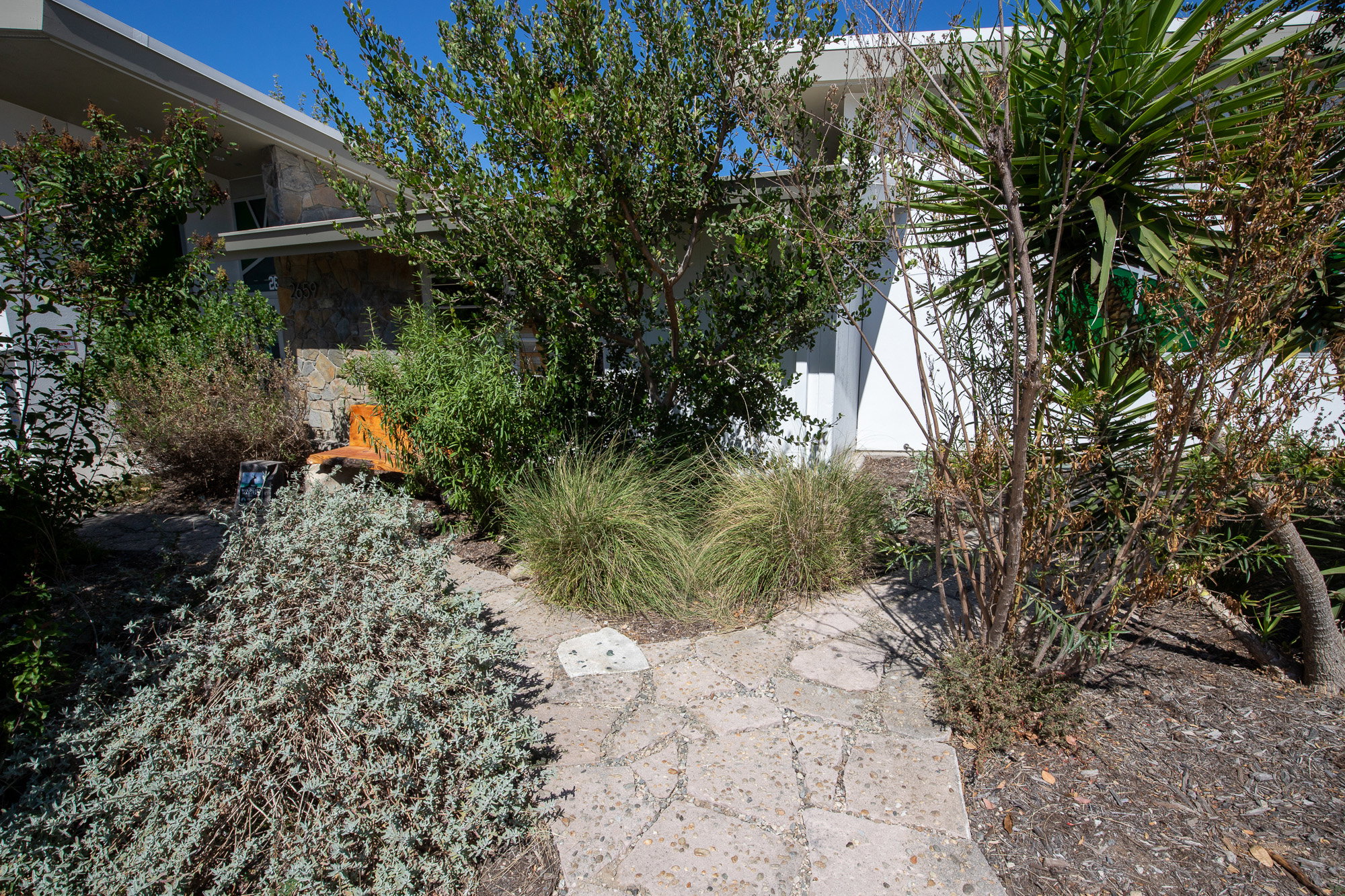
Fortunately, the landscaping did not succumb to the same impulse. Mature trees soften the angles, and the expanded garden grounds a building that otherwise seems determined to declare its newness. The landscape does more than complement the architecture. It rescues it.
A Garden After Its Purpose Is Gone
From there, I revisited two demonstration gardens established through the same Rosemead water-conservation project in 2014.
The first occupied the former Rosemead Chamber of Commerce property, a low stucco building that appears to have begun life as a house. When I photographed the site in 2021, the garden was already showing its age, but it was still recognizably maintained as a public landscape. It had a bench, a variety of plantings, and a clear purpose.
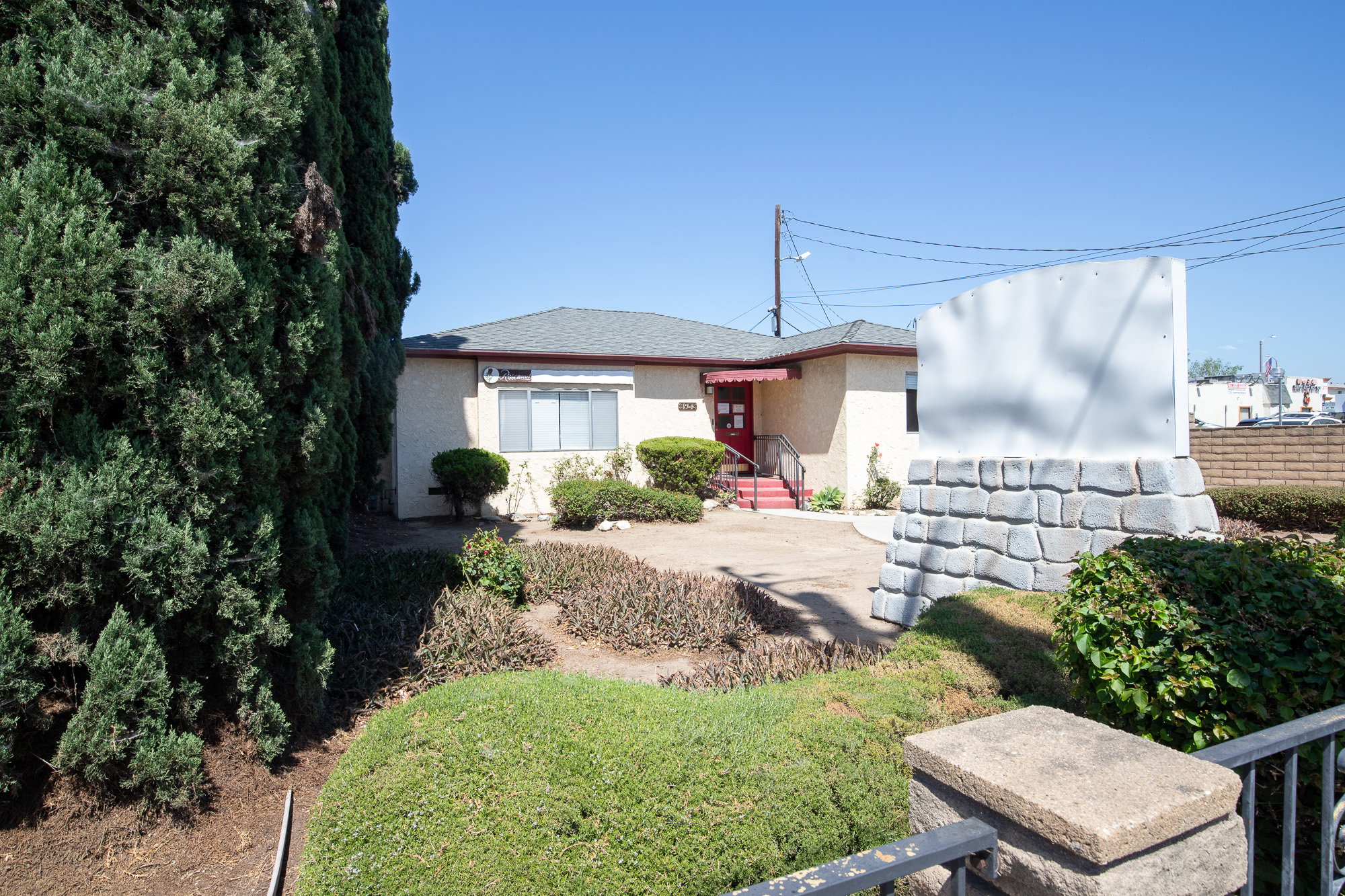
The Chamber of Commerce has since moved to a larger office building. The old property remains, but little of the demonstration garden’s original identity survives. The bench is gone. Some of the plants have been removed. Other areas look as though someone cleared away whatever appeared untidy and then stopped.
A strip of white paint now covers most of the old monument sign. Where it once read “Rosemead Chamber of Commerce,” it now simply says “Rosemead.”
The place has the strange suspended quality of a property prepared for sale but never sold. It has not become anything new, yet it has already ceased to be what it was.
Standing there, I thought about my own garden. What will happen to it when the person who understands why each plant is there is no longer present to care for it? Perhaps this is what I should expect: not immediate destruction, but gradual simplification. A bench disappears. A plant I once treasured is removed because a new owner thinks it looks messy. A layered garden becomes a collection of clipped shrubs and open dirt. Meaning drains away before the plants themselves are entirely gone.
A Garden That Barely Changed
The final stop was the California American Water demonstration garden at the company’s Rosemead facility. Because it had been built as part of the same 2014 project, I was curious whether it, too, had disappeared.
Instead, it was more or less unchanged.
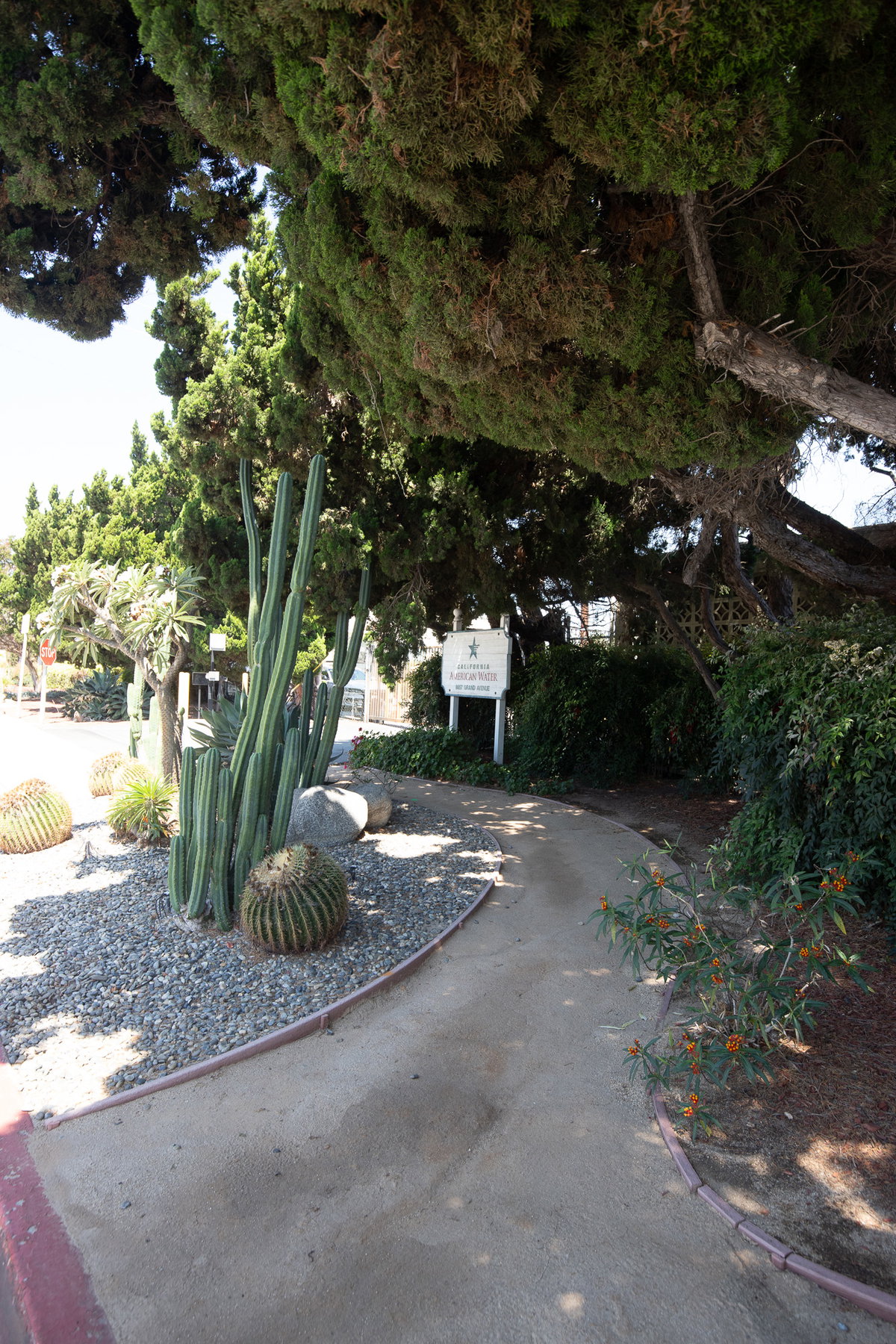
The garden reflects a familiar version of early water-wise landscaping: saving water presented primarily through succulents, cacti, gravel, and dyed wood-chip mulch. There are a few California native plants, but the main focal point is a sculptural arrangement of columnar cacti and golden barrels near the entrance.
It is not the kind of garden I would design. The dyed mulch gives parts of it the atmosphere of a conventional commercial property, and the planting relies heavily on the old equation of drought tolerance with desert plants. Yet the garden remains legible. It still communicates the idea for which it was built.
Even the exposed drip tubing was still there, though it had been tucked more carefully beneath the mulch.
That small detail seemed an appropriate place to end the day.
Some places are destroyed. Some recover slowly behind locked gates. Some are renovated so aggressively that their former character survives mainly in memory. Some gardens lose their purpose and are gradually erased. Others remain almost exactly as they were, their irrigation lines pushed just slightly farther out of sight.
Change is not one thing. It can be catastrophic, restorative, cosmetic, or so gradual that no single moment announces it. Sometimes the landscape returns. Sometimes it is rebuilt. Sometimes it survives only because someone continues to understand why it matters.