Demonstration Garden

Glendora Demonstration Garden

A water-wise garden that reflects Glendora’s foothill identity and the care it puts into its civic spaces.

Location

140 S Glendora Ave, Glendora, CA 91741, Glendora, Glendora, Los Angeles

A compact, thoughtful civic garden that still works as both a teaching landscape and an everyday place to pause beside the library.

Open directions →
Garden Seating and Dry Creek Bed

Overview

The demonstration garden beside Glendora Public Library says something about Glendora. It is small, but it occupies meaningful space in the center of the city’s public life, surrounded by the library, City Hall, the police headquarters, the Armed Forces Memorial, and the civic plaza.

Municipal demonstration gardens usually have to carry several messages at once. They are meant to teach, but they also have to offer choices: native plants, shade planting, habitat, lawn alternatives, groundcovers, irrigation ideas, drought-tolerant ornamentals, and a place to sit. Glendora compresses those ideas into a compact landscape that people actually pass through and use.
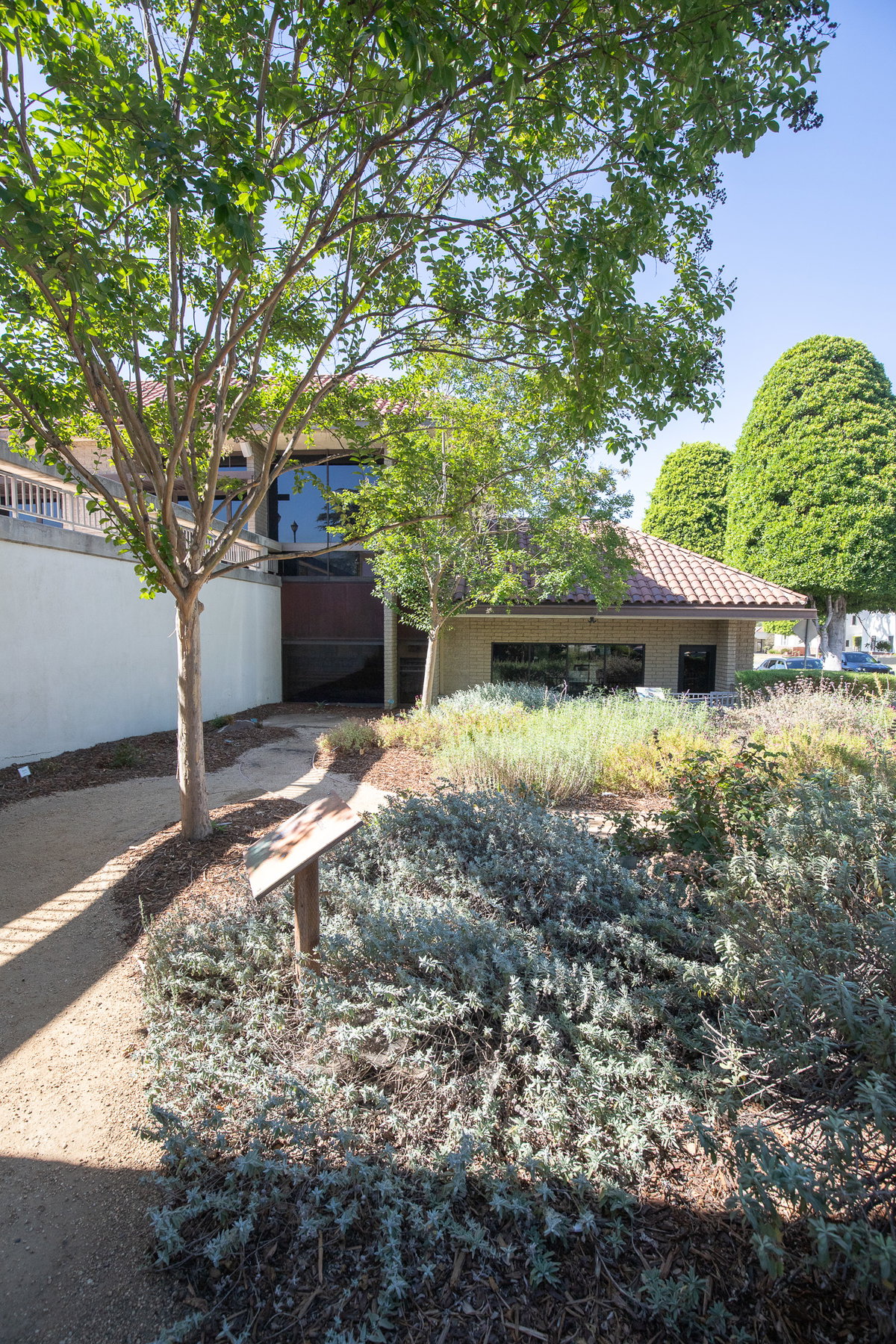
Silvery Groundcover Beside the Path

A low mass of silvery foliage demonstrates how drought-tolerant groundcover can soften the edge of a civic walkway.
The place

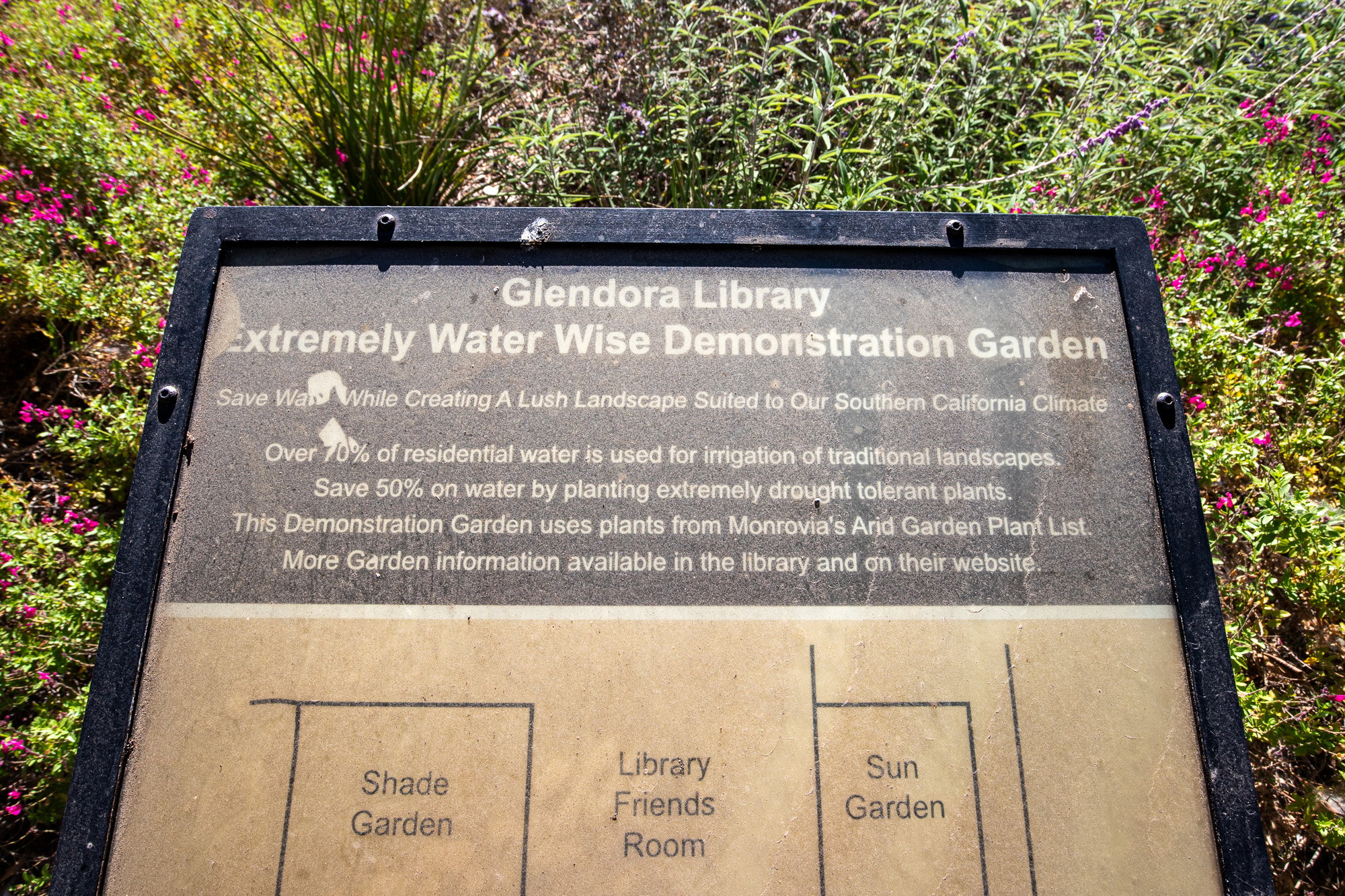
This is a municipal teaching garden rather than a botanical collection. Its weathered entrance sign calls it the Glendora Library “Extremely Water Wise Demonstration Garden” and divides the site into sun and shade sections.

In landscape design, we often think of a garden as a series of rooms, each with its own purpose and feeling. Demonstration gardens have to compress those rooms until they can feel more like booths at a convention: here is a native section, here is a groundcover, here is a plant for shade, here is a habitat message, and here is another version of a low-water landscape.

That compression is not necessarily a flaw. The garden is speaking to people with different tastes and different starting points. Some visitors may be ready for a predominantly native garden; others may want to keep familiar trees, preserve an open lawn-like feeling, or begin with a few drought-tolerant shrubs. The garden gives each of them something recognizable to consider.

What to see

Start with the garden’s overall organization. Paths move between small areas devoted to sun, shade, California natives, wildlife, dwarf plants, flowering shrubs, groundcovers, and water-wise planting. Interpretive panels and individual labels survive in varying condition.

Several labels can be read confidently. These include coral fountain (Russelia equisetiformis), coffeeberry under its older label Rhamnus californica (now generally treated as Frangula californica), yellow evening primrose labeled Calylophus serrulatus, and a coral bells selection labeled Heuchera ‘Wendy.’ Other plants should be treated more conservatively unless a label or diagnostic photograph supports the identification.

Look beyond the designated garden as well. Nearby picnic tables, mature shade trees, planted beds, civic lawns, memorial landscaping, and a playful parking-lot planting decorated with frogs, bees, and other garden figures extend the landscape vocabulary across the complex.

Extremely Water Wise Demonstration Garden Sign

A weathered sign identifies the site as the Glendora Library Extremely Water Wise Demonstration Garden and maps its sun and shade sections.

Field notes

What I appreciated most was not any single specimen. It was the way the garden sits within the ordinary movement of the civic center. People pass it on the way to the library, City Hall, the police station, the plaza, or their parked car. The benches and shaded areas are useful for lunch, reading, waiting, or taking a short break from an office.

The garden has aged, as demonstration gardens inevitably do. Some signs are faded, some beds are thinner than their labels suggest, and maintenance has introduced its own logic. Yet Glendora’s garden has held together better than many. The larger structure still reads, the planting remains substantial, and the space still functions as both a lesson and a place.

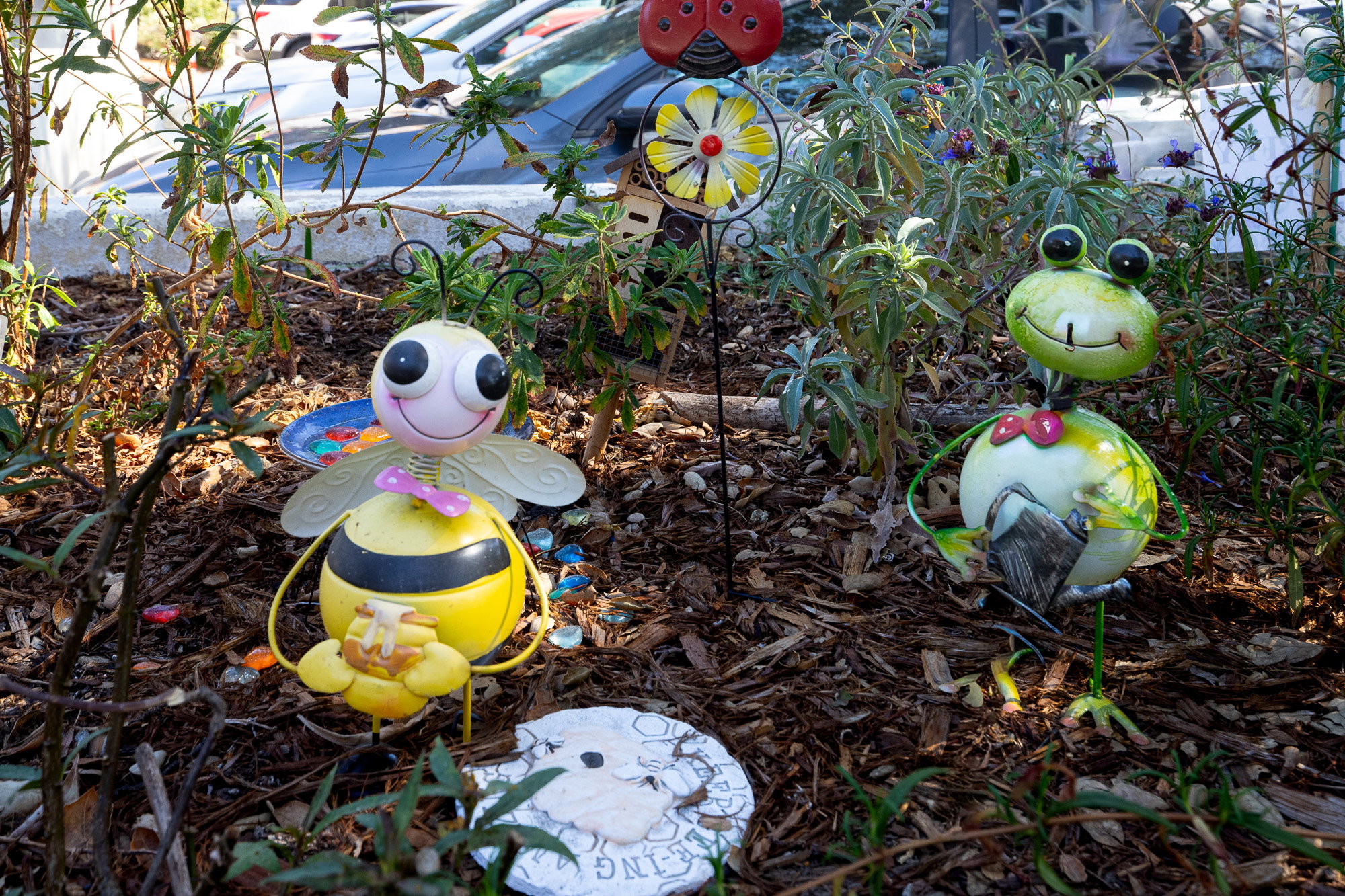
I was especially taken by the smaller gestures outside the formal garden. On the other side of the complex, an ordinary planter had been filled with water-wise plants and decorated with frogs, bees, birdbaths, and handmade signs. It is modest and a little idiosyncratic, but that is part of its charm. The idea of the garden has escaped its assigned boundary.

Garden Ornaments in a Civic Planter

Bees, frogs, birdbaths, and other playful ornaments turn an ordinary planting bed into a more personal and inhabited garden space.

Together, those details make the civic center feel more coherent. Glendora is not simply displaying one environmental project beside the library and checking a bureaucratic box. The city has allowed the same sensibility to appear in places people use every day.

Native plants

The garden contains sections explicitly identified as “CA Natives” and “Shady Natives,” but it is not exclusively native. The original water-wise concept draws from California plants, Southwestern and Mediterranean-climate ornamentals, succulents, grasses, and conventional civic trees and shrubs.

Coffeeberry is one of the clearly labeled California natives, although the photographed label uses the older name Rhamnus californica; the accepted name is now generally Frangula californica. A labeled Heuchera selection illustrates how native genera and horticultural hybrids can both appear in a teaching garden.

The photographs should not be used to force species-level names onto the mature shade trees or unlabeled shrubs. In a planted civic landscape, native and introduced look-alikes are both plausible, and the value of the garden does not depend on pretending to know more than the evidence allows.

Garden design

The most successful design move is the relationship between the garden and the civic center. It is tucked beside the library, but it is not hidden on leftover land. It occupies prime public space and gives the institutional complex a softer, more human edge.

The garden demonstrates contrast at a very compressed scale: sunny and shady areas, clipped and loose forms, open groundcovers and dense shrubs, native and nonnative plants, formal civic architecture and informal garden ornament. The individual “rooms” are small, but the sequence remains legible.

The surrounding site strengthens the lesson. Mature trees shade a picnic area; ornamental grasses and flowering perennials soften paths; and smaller water-wise beds appear beyond the formal garden. Those extensions make the project feel less like an isolated exhibit and more like part of Glendora’s everyday public landscape.

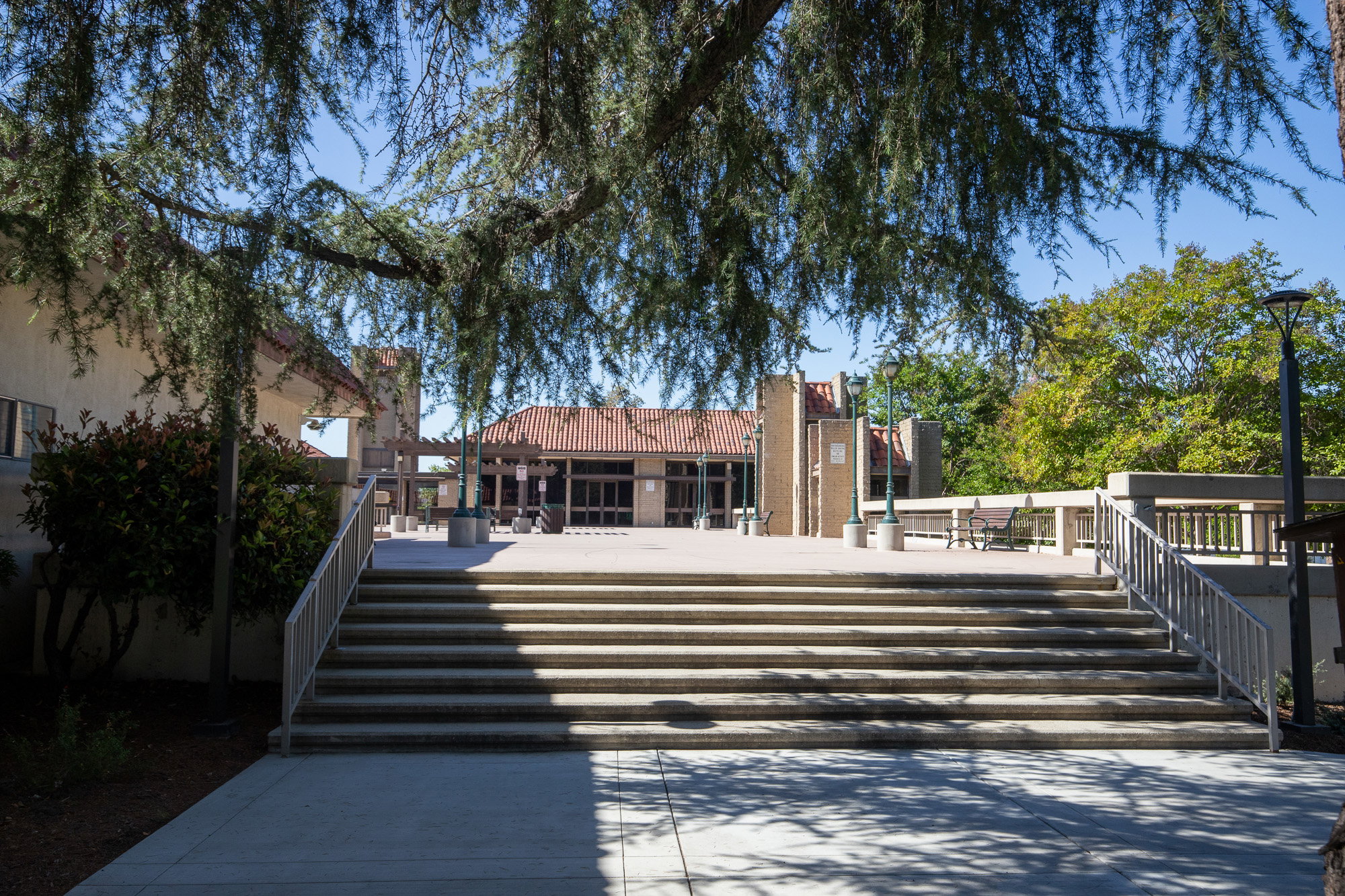
Steps to the Civic Plaza

Broad steps lead from the shaded lower walkway toward the library plaza and civic buildings.

Wildlife

The garden explicitly presents habitat as part of its educational message, including a weathered “Attracts Birds” panel. Flowering shrubs, grasses, groundcovers, seed heads, and mature trees can provide food, cover, and perching opportunities even in a compact civic site.

The surrounding hardscape and frequent human activity limit the site as wildlife habitat, but the garden can still function as a small link within the larger urban landscape. The playful birds, bees, frogs, and butterflies used in the signs and ornaments also make that purpose easy for children to recognize.

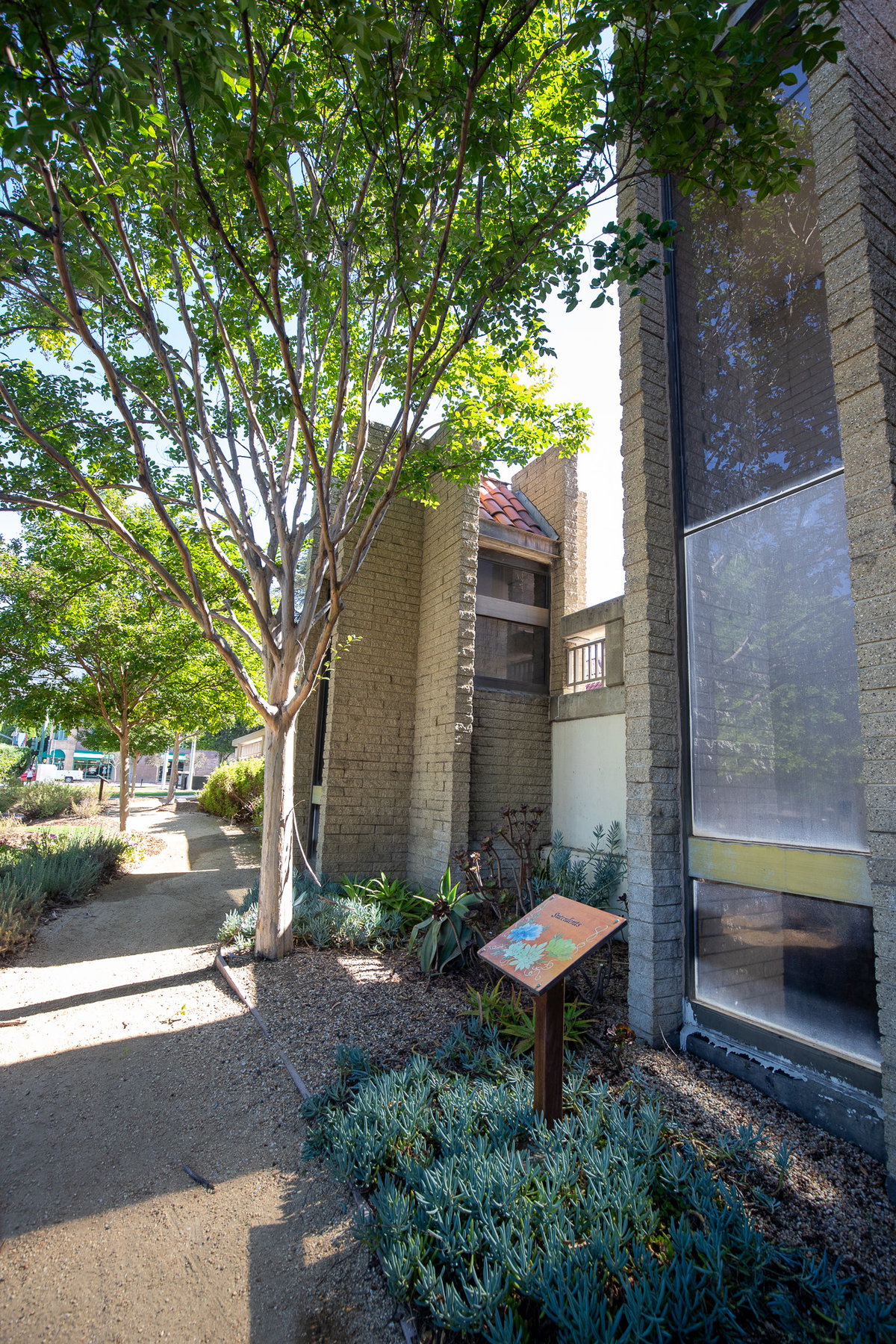
Succulent Groundcover Along the Library

Blue-green succulent groundcover lines the narrow path between the garden and the library building.

Photography

The best photographs show the garden in context: planted paths beside the library, the contrast between loose water-wise planting and tightly clipped civic trees, shaded picnic tables, and views that connect the garden to City Hall, the memorial, and the plaza.

Morning and late-afternoon light can be harsh where sunlit plants sit against shaded buildings. Expose for the highlights and use the paths, signs, and architecture to organize the frame.

Detail photographs are most useful when they include a readable label. For unlabeled plants, photograph leaves, flowers, fruit, bark, and the whole plant rather than relying on a single attractive close-up.

Visiting with kids

This is not a children’s garden, but its small scale makes it easy to explore with a child before or after a library visit. The handmade signs, bird and flower illustrations, frogs, bees, birdbaths, and short paths offer many things to notice without requiring a long outing.

Ask children to compare the sunny and shady sections, find different groundcovers, look for signs of birds or insects, and decide which plants seem to be thriving. The garden is useful precisely because the lesson is embedded in a place they might visit for other reasons.

Home garden takeaways

The garden’s most practical lesson is that water-wise landscaping is not a single visual style. It can include native shrubs, flowering perennials, grasses, groundcovers, retained trees, shade planting, habitat features, and even a small open green area.

It also shows the importance of planning for maintenance and time. A demonstration garden is not finished when it is installed. Plants grow into one another, labels fade, some specimens disappear, and pruning changes the design. A resilient home garden should still make sense after those changes begin.

Finally, the broader civic center suggests that a garden does not have to remain isolated. Repeating a few plants, materials, or habitat ideas in nearby beds can make separate spaces feel like one landscape.

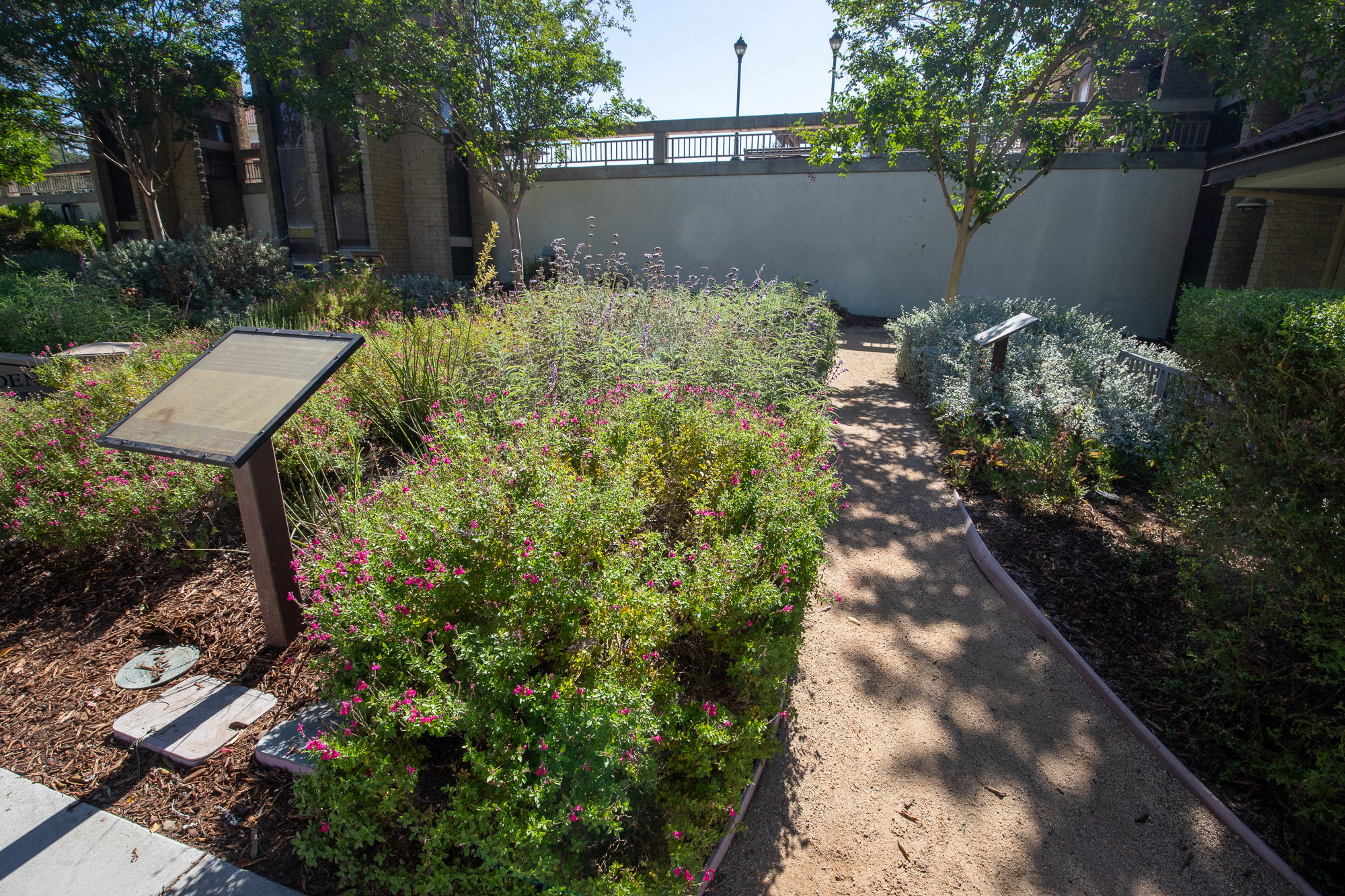
Sun Garden Path

Flowering shrubs, silvery foliage, interpretive signs, and a firm decomposed-granite path form one of the garden’s compact teaching spaces.

Before you go

The garden is beside Glendora Public Library at 140 South Glendora Avenue. It is a compact stop within the civic center, not a destination that requires a long visit.

The main interpretive sign identifies a sun garden and shade garden. Individual labels vary in readability, and some may outlast the plants they originally described.

Use the garden as a starting point rather than a definitive plant catalog. Confirm names independently before buying or planting anything, especially when the specimen is unlabeled or the label appears displaced.

Combine the visit with the library, City Hall grounds, Armed Forces Memorial, civic plaza, or a walk through downtown Glendora. Restrooms depend on the library being open.

Photos

See the photo gallery.

View gallery

Location

Where to find Glendora Demonstration Garden

140 S Glendora Ave, Glendora, CA 91741, Glendora, Glendora, Los Angeles

View map