Located just before Monrovia’s Old Town from the south, Grow Monrovia’s Demonstration Garden features a hugelkultur, bioswale, and native plants. It demonstrates how common commercial parkways can utilize native plants to achieve an inviting space.
The place
The Monrovia Native Plant Demonstration Garden is a community project along Myrtle Avenue, Chestnut Avenue, and Walnut Avenue. Grow Monrovia created it to demonstrate how native planting and sustainable gardening practices can be used in commercial parkways.
The project’s stated goals include building community through volunteer work, demonstrating native plant species, documenting urban biodiversity, and capturing water while minimizing supplemental irrigation.
What to see
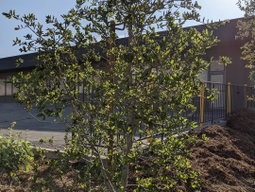
The garden includes native sages, California fuchsia, oak trees, Palmer’s Indian mallow, yarrow, milkweed, and other California native plants.
The legacy gallery documents construction of the hugelkultur, watering work, western redbud, Cleveland sage, manzanita, and oak trees.
Native plants
Grow Monrovia highlights white sage, black sage, purple sage, California fuchsia, Engelmann and coast live oaks, Palmer’s Indian mallow, yarrow, milkweed, and other native plants as examples of species suitable for local landscapes.
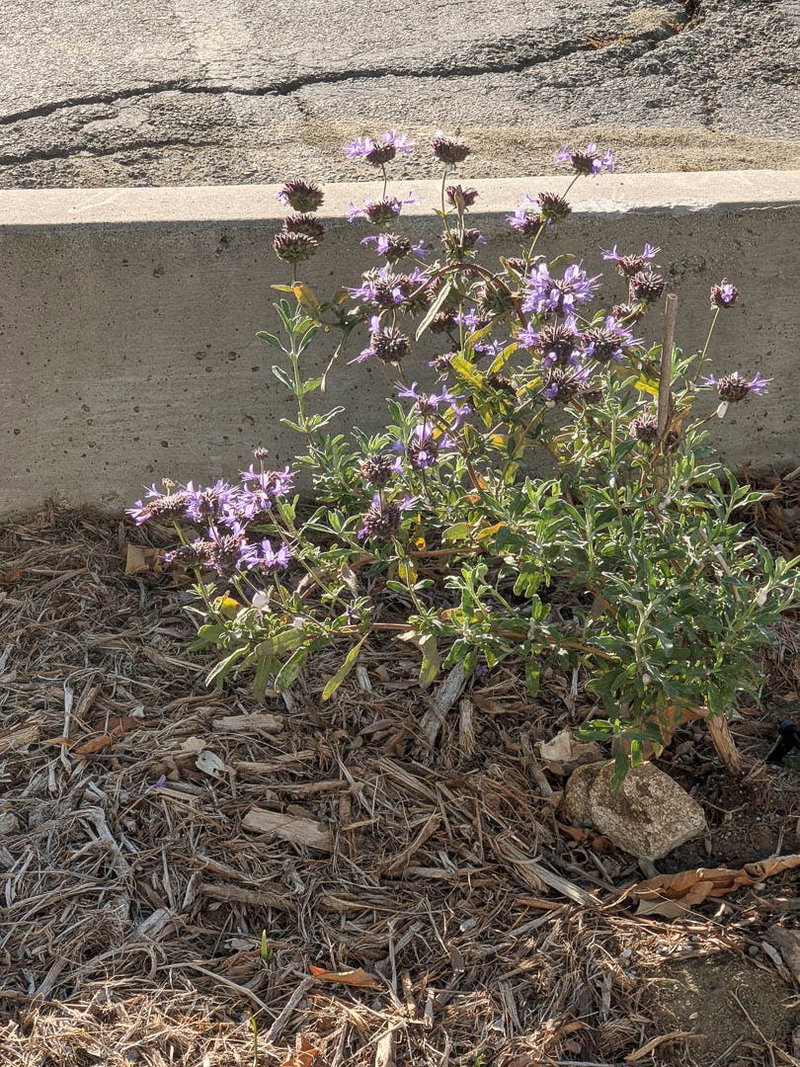
The fragrant Cleveland sage or blue sage, Salvia clevelandii, is a perennial plant that is native to Southern California and northern Baja California. These flowers are loved by many native pollinators.
Garden design
The garden uses drip irrigation while plants become established. Grow Monrovia describes the slow irrigation as a way to move water deep into the soil and encourage deeper root systems.
Mulch is used to moderate soil temperature, retain moisture, reduce erosion on slopes, and catch debris before it enters local waterways.
The hugelkultur is built from buried wood covered with soil. The bioswale is shaped like a dolphin and positioned to capture runoff from the adjacent parking lot.
Wildlife
The project was designed to promote and document biodiversity in an urban space. Grow Monrovia notes habitat use by scrub-jays, lizards, monarchs and other butterflies, native bees, hummingbirds, and other wildlife associated with native plants.
Home garden takeaways
The site demonstrates several practices that can be adapted to home landscapes: native parkway planting, drip irrigation, deep mulch, hugelkultur, and bioswales that slow, spread, filter, and retain runoff.
Before you go
The garden runs along Myrtle Avenue near Chestnut and Walnut avenues, just south of Monrovia’s Old Town.
Grow Monrovia’s project page describes regular volunteer work at the garden and provides current contact information for anyone interested in helping.