A native plant demonstration garden surrounding the Nature Center at one of Southern California’s remaining urban vernal wetlands.
Photos
Gallery
Click any image to enlarge
Overview
A native plant demonstration garden encircles the visitor center of the Madrona Marsh preserve. Madrona Marsh is 43 acres of marshland left undeveloped after land intended for oil drilling was never used for that purpose. It is now an important bird preserve and habitat associated with the rare Palos Verdes blue butterfly.
The place
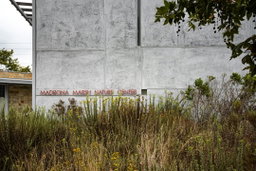
The Nature Center stands across the street from the Madrona Marsh Preserve in Torrance. The preserve is one of Southern California’s remaining vernal wetlands, filling during the wetter part of the year and drying later in the season.
The Nature Center provides exhibits and educational programs about the marsh, wetlands, and the plants, insects, and animals that depend on them.
What to see
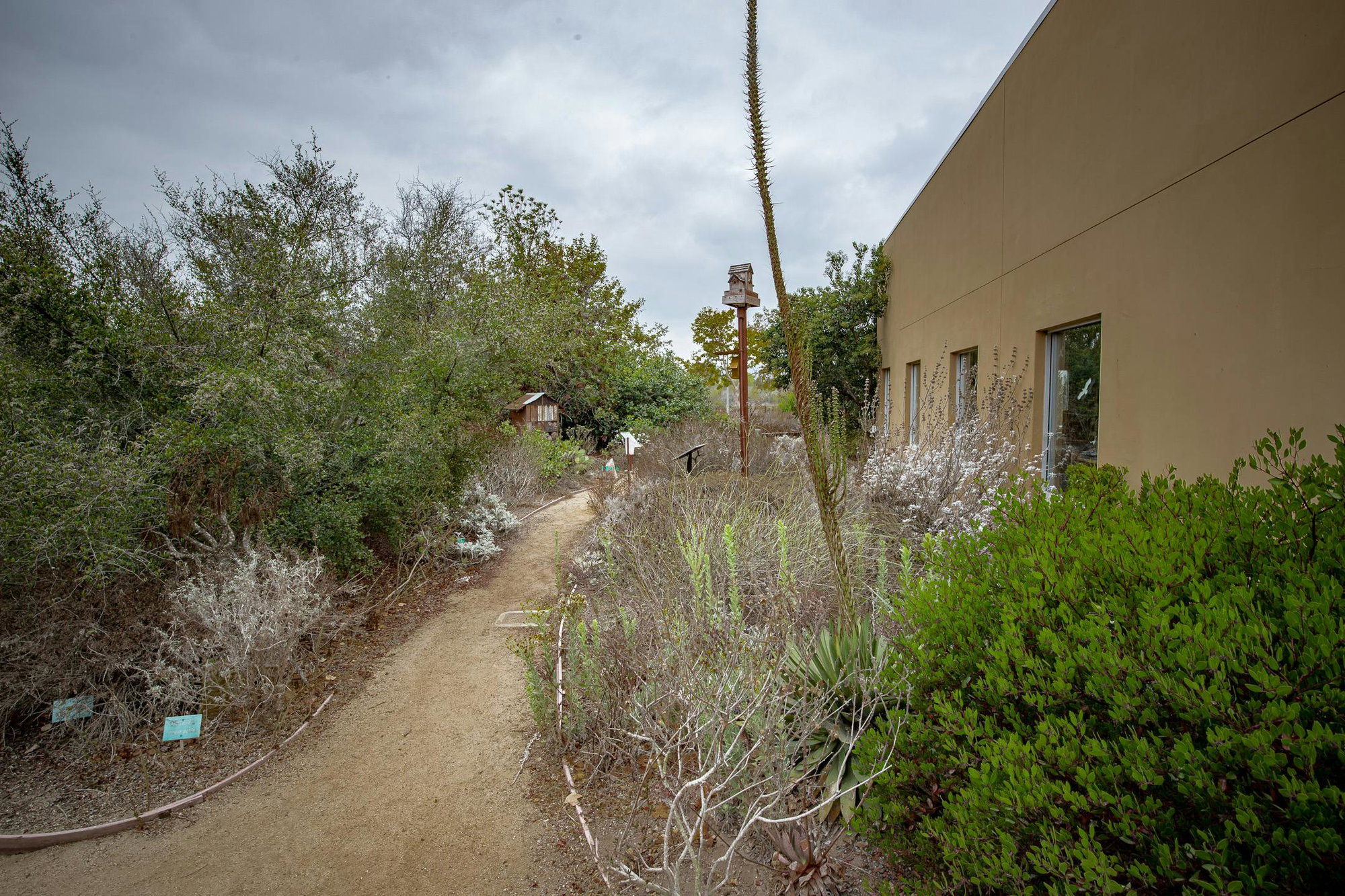
The water-wise native garden surrounds three sides of the Nature Center and was designed to provide ideas for gardeners interested in using locally native plants instead of conventional turf and shrubs.
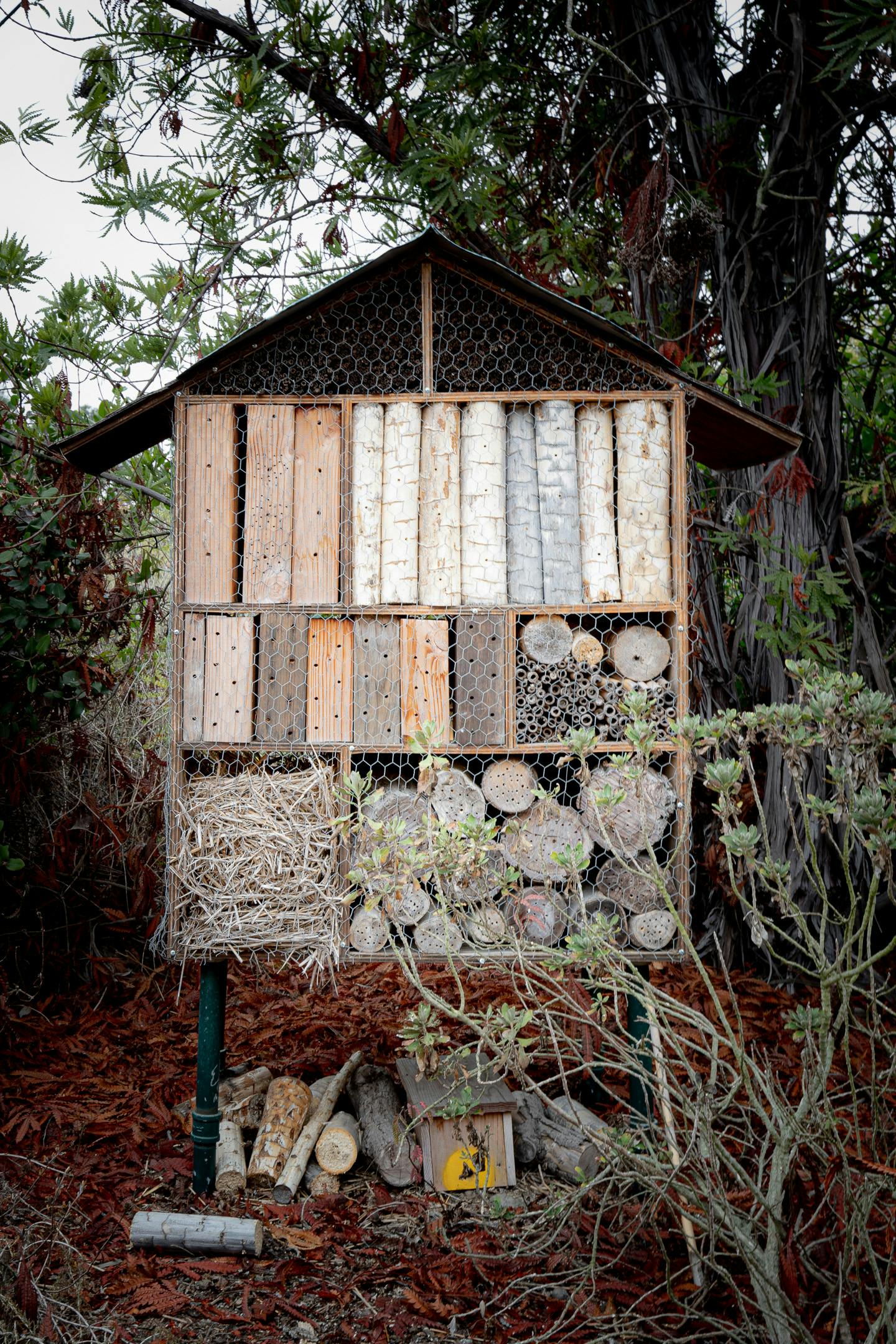
The legacy gallery documents labeled native plants, recycled-concrete paths, a pollinator house, Channel Islands plant signage, seaside woolly sunflower, dudleya, blue elderberry, and views into the preserve.
Pollinator houses are growing in popularity as a way to attract and protect native bee populations. Native bees live very different lives than honeybees which are from Europe. Most native bees are solitary, they like to live in holes and cracks within wood, or build homes with mud or even burrow in sand. Native bees tend to be much more effective pollinators than honeybees, and all native bees lack the ability to sting. Native bee populations are at risk due to habitat loss and benefit most readily from landscaping with native plants.
Native plants
The garden surrounding the Nature Center emphasizes locally native, water-wise plants. Plant labels and interpretive signs help connect the demonstration garden to the larger wetland preserve.
Garden design
The demonstration garden wraps around three sides of the Nature Center. The legacy gallery shows recycled-concrete paths, labeled plantings, and a pollinator house integrated into the landscape.
Wildlife
Madrona Marsh is an important urban wetland and bird habitat. Its seasonal wet-and-dry cycle supports changing wildlife communities throughout the year.
The preserve is also associated with the Palos Verdes blue butterfly.
Visiting with kids
The Nature Center offers exhibits, hands-on displays, live-animal exhibits on a rotating basis, and educational programs for children and families.
This pathway encircled the building and reveals a much larger garden than first appears.
Before you go
The Nature Center and preserve are across the street from one another. The official visitor information lists hours as Tuesday through Saturday, 10:00 a.m. to 5:00 p.m., with free admission.
Preserve access may change during or after rain and other weather events. Visitors should stay on designated paths. Pets are not allowed in the preserve, although they are allowed on paths around the Nature Center.