
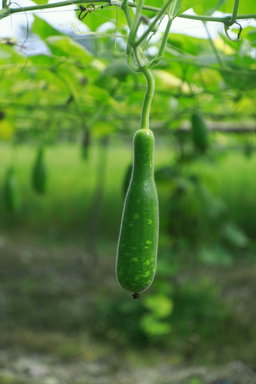
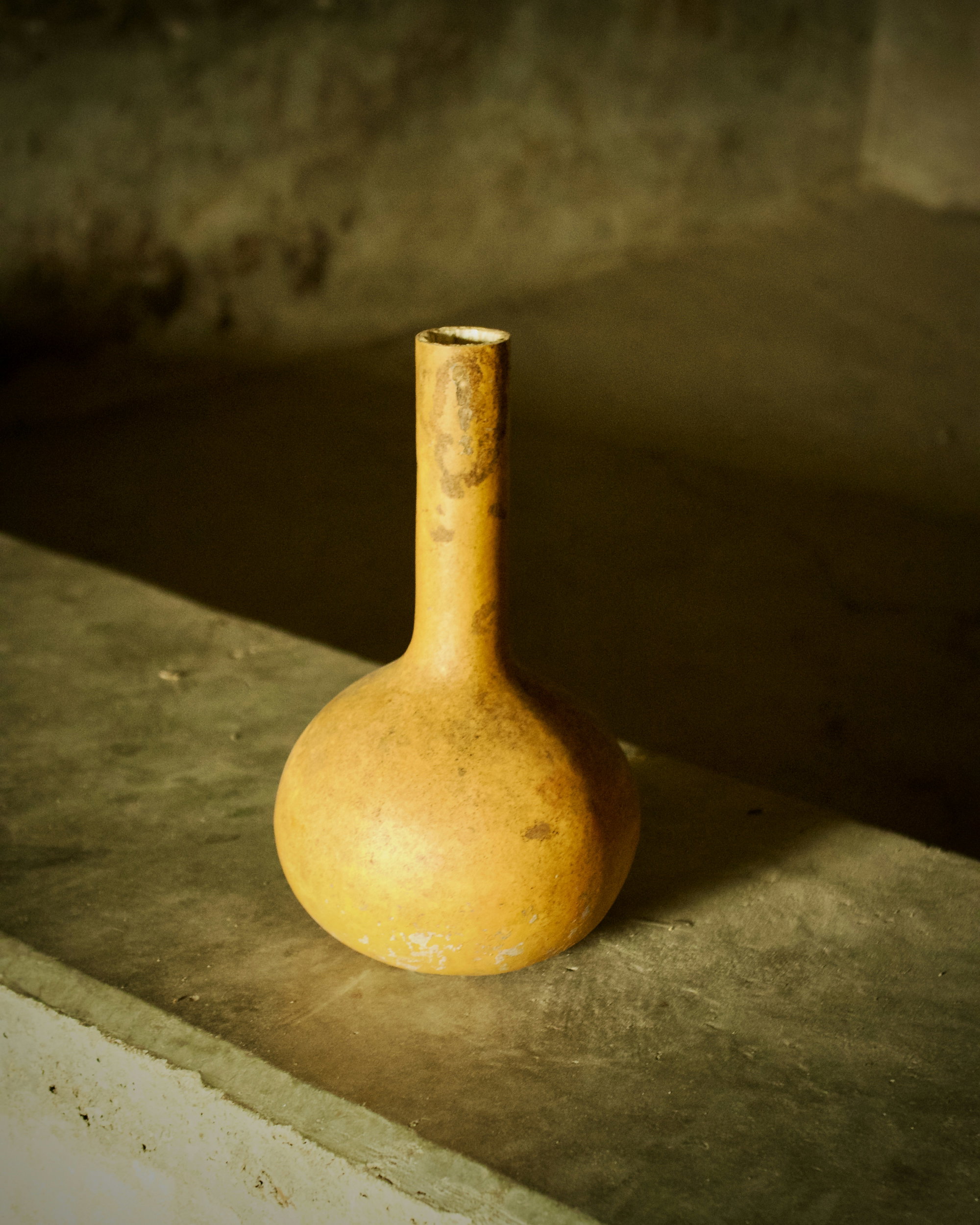
Most seed catalogs do not really prepare you for it. They tend to show the more attention-grabbing forms, like the birdhouse gourds. Those can be dried and turned into containers or utensils. This is real, but misses the point.
Bottle gourd is not a novelty crop. It is a workhorse.
A crop used all over the world
Bottle gourd has been grown for thousands of years, likely because it produces reliably in warm climates.
You see it across cuisines:
- In Indian cooking, it is called dudhi or lauki and used in dals, sabzis, and kofta
- In Chinese cooking, it is known as opo squash and used in soups and stir-fries
- In the Caribbean, it often goes by calabash and shows up in stews and soups
It is one of those vegetables that shows up in many places for the same reason. It is productive, mild, and easy to work with in the kitchen.
Bottle gourd is also one of the oldest cultivated plants in the world, and it appears in the Americas thousands of years before European contact. Archaeological finds in places like Mexico and Peru date back 7,000 to 10,000 years.
How it got there is still debated. One theory is that dried gourds floated across oceans, with the hard shell protecting the seeds. Others suggest it was carried by early human movement. Either way, it is one of the few Old World crops that made it to the New World long before modern trade.
If you have never cooked with it before, it is a very adaptable vegetable. It has a mild flavor and takes on whatever you cook it with. You can see how it is used in real dishes here.
What I grew
In my house we call it dudhi, since my wife is Gujarati. That is the name I use, though lauki is more widely recognized in India.
I planted it in a raised bed surrounded by six foot hardware cloth panels. I assumed that would be enough structure for it to climb. It was not.
At the same time, I planted ridge gourd, which we call turiya. Both vines took off once the weather warmed up. In my garden, bottle gourd did not just grow. It expanded.
Growth habit and space planning
The vines quickly outgrew the space I had planned. Instead of staying on the panels, the dudhi climbed out of the bed, reached my fence, and then made its way into a nearby banana tree.
At one point it had crossed into my neighbor’s yard and started fruiting on his trellis. Fortunately he is a gardener and did not mind the extra plant.
If I were planting again, I would plan for more space from the start.
- A six foot trellis is not enough if the plant is happy
- The vines will climb anything nearby
- It will keep growing through peak summer and into fall
It is better to guide the vines early than try to manage them later.
Pollination and early flowers
When the bottle gourd first started flowering, I was disappointed. The flowers would open, then shrivel and fall off without setting fruit. It turns out this is completely normal.
The first round of flowers are almost all male. These tend to be more open and sit on a thin stem, and they do not produce fruit.
After a couple of weeks, the plant started producing female flowers. You can recognize these by the small fruit behind the flower. Once those appeared, it began setting fruit quickly.
If you are seeing flowers drop early on, it is usually not a problem. It is just part of how the plant gets established.
Water use and growth in Southern California
I grew these on a drip system with a timer. Given how fast the vines grow and how much leaf area they produce, it is not surprising that they use a fair amount of water. This is a large plant, not a small herb or compact vegetable.
That said, it is helpful to think about it in terms of total footprint.
A single bottle gourd plant, even when it is sprawling, is still using water over a relatively small area compared to something like a lawn. You are concentrating that water into a plant that is actually producing food.
In my experience, it did best with consistent deep watering rather than frequent shallow watering. The vines would sometimes look stressed in the middle of the day during peak heat, but they recovered by evening.
If you are growing in Southern California, this is a plant that makes sense when you are trading ornamental or lawn space for something productive. It is not a low-water crop, but it is an efficient use of space and water for the amount of food it can produce.
When to harvest bottle gourd
This is the part that matters most if you plan to cook with it.
Bottle gourd should be harvested young.
- Ideal size is around 12 to 18 inches
- At this stage the flesh is tender and the seeds are soft
The first time I grew it, I let a few fruits go too long. They kept growing into very large, heavy gourds. Some were close to four feet long.
The longer fruits look impressive, but the texture is not good. The flesh becomes coarse and the seeds harden.
The other challenge is that the fruits are easy to miss. They hide behind the leaves, even when they are already oversized.
If you are growing dudhi for the kitchen, it is worth checking the vines regularly and harvesting early.
If you want to see how that difference shows up in actual cooking, this page walks through the ingredient and includes recipes.
Disease and pest behavior in my garden
One thing that stood out was the lack of powdery mildew.
In my garden, cucurbits often start strong and then decline once mildew sets in. That did not happen here, even with dense vines growing together.
My assumption is that these more tropical gourds are better adapted to warm conditions than typical summer squash.
Also, in the same bed I had a ground cherry plant that developed a heavy mealybug infestation. I only noticed it when I cut the plant down at the end of the season. The mealybugs did not spread to the dudhi or the turiya. So in my experience, this was a pretty pest-resistant plant. It suffered little stress in the hot summer months, which must have helped.
Productivity and yield
If there is one clear takeaway, it is how productive this plant is.
Once established, it keeps producing through the hottest part of summer. It is not a one or two harvest crop. It continues as long as conditions are favorable.
If I were planning a garden to rely on for food, this would be one of the crops I would include.
Growing dudhi in Southern California
Bottle gourd is a good fit for this climate.
- It thrives in heat
- It benefits from a long growing season
- It responds well to vertical growing if given enough structure
If you are planning to grow this, start with good seed.
If you are considering other similar crops for summer, this guide covers the main Indian cucurbits that do well in this climate.
Final thoughts
Bottle gourd is easy to underestimate.
It does not have the immediate appeal of tomatoes or peppers. But in the right conditions, it produces heavily, grows aggressively, and fits into a wide range of dishes.
The main lessons from my experience were simple:
- give it more space than you think
- guide the vines early
- harvest earlier than you expect
If you do those three things, it is a very rewarding plant to grow.