Demonstration Gardens

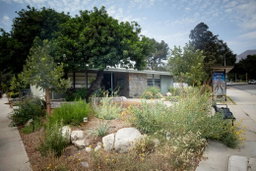
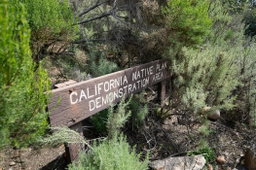
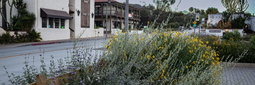
Demonstration gardens are generally small gardens intended to demonstrate some beneficial aspect of gardening, such as landscaping with native plants, water capturing techniques, growing food or drought tolerance

Loading...

A demonstration garden is a designed landscape meant to illustrate a concept or group of concepts in garden design. Other names for “demonstration gardens” are “teaching gardens” or “learning landscapes.”

The purpose of a demonstration garden is to present an example of how common problems are solved with garden design, horticulture or landscaping.

Demonstration gardens come in all sizes, large and small. Some take up multiple acres within larger botanical parks, such as Crescent Farm in the Los Angeles County Arboretum. Others are small parkways at the side of the road.
Airport Avenue Demonstration Gardens in Santa Monica

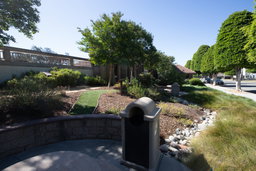
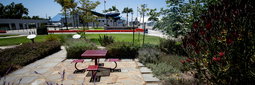
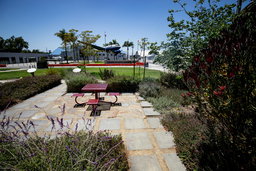
Not one, but three demonstration gardens arranged side-by-side at Santa Monica airport, just across the street from the soccer fields at Airport Park. They use a mix of California native plants and other drought-tolerant plants while demonstrating garden functions: Play, Relax, and Entertain. Santa Monica also maintains an informative website with a description of the project, maps and plant lists.
Address: 3200 Airport Avenue, Santa Monica, CA, 90404

Phone: (310)458-8972

|Website|Map

Balboa Park Native Plant Demonstration Garden

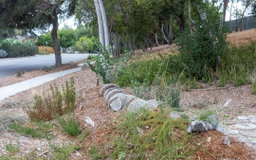
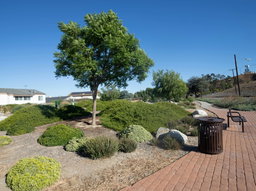
A native demonstration garden at Balboa Park, in Morley Field, adjacent to tennis courts and a dog park. There isn’t a lot of land dedicated to this garden, but it packs in a lot of plants, a couple of bioswales, and a good pathway. Across the street is a roped off nature preserve as well.
Address: 2201 Morley Field Dr, San Diego, California, 92104
|Website|Map

Community Demonstration Garden at Sheldon Reservoir

Began in August 2019, this demonstration garden is a community project on a parkway bordering the Sheldon Reservoir. It features a large Hügelkultur, native plants, a Mediterranean plant section and a fire-wise planting demonstration.
Address: N Arroyo Blvd and Coniston Rd, Pasadena, CA, 91103
|Website|Map

Madrona Marsh Nature Center

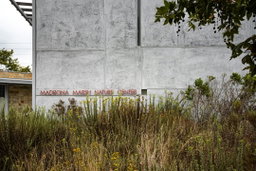
Native plant demonstration garden encircled the visitor’s center of the Madrona Marsh preserve. The Madrona Marsh is 43 acres of marshland left undeveloped as it was intended to be used for oil drilling that never happened. It is now an important bird preserve, and home to what is possibly the world’s rarest butterfly, the Palos Verdes blue.
Address: 3201 Plaza del Amo, Torrence, CA, 90505

Phone: (310) 782-3989

|Website|Map

Manhattan Beach Botanical Garden

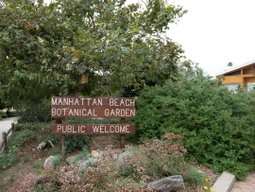
A 2/3 acre botanical garden inside Polliwog Park in Manhattan Beach. A demonstration garden exhibiting drought-tolerant plants, mostly local California natives, and a certified nature habitat. Free admission. Construction started in 1994, formed a nonprofit organization in 1997, opened on Earth Day, 2001. It
Address: 1236 North Peck Avenue, Manhattan Beach, CA, 90266
|Website|Map

Monrovia Community Garden

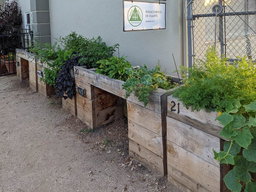
A community garden demonstrating growing your own produce in beautify raised beds. A great spot to check out if walking or driving by. They also collect food waste for compost and do occasional workshops.
Address: 303 West Colorado Blvd., Monrovia, CA, 91016
|Website|Map

Monrovia Native Plant Demonstration Garden

Located just before Monrovia’s Old Town from the south, Grow Monrovia’s Demonstration Garden features a hugelkutur, bioswale, and native plants. It demonstrates how common commercial parkways can utilize native plants to achieve an inviting space.
Address: Myrtle ave and Chestnut ave, Monrovia, CA, 91016
|Website|Map

Monterey Park Demonstration Garden

This demonstration garden was created by the city of Monterrey Park to demonstrate multiple different styles of landscaping that is drought tolerant. They have signs to explain each section of the park. It also features two bioswales. It was inaugurated June 2, 2017
Address: 720 Metro Dr, Monterey Park, CA, 91755
|Website|Map

Peck Road Water Conservation Park

A 5-acre water conservation park that is located where Arcadia, Irwindale, Monrovia and El Monte all meet, on Mungi Lake. It features willows, oak trees and other native plants. Signage describes many of the native plants and it also features bioswales.
Address: 5401 N. Peck Rd., Arcadia, CA, 91006

Phone: (626) 334-1065

|Website|Map

Rosemead Chamber of Commerce

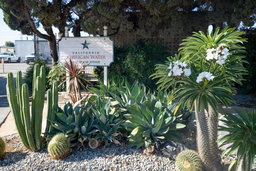
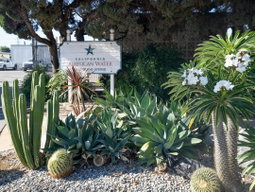
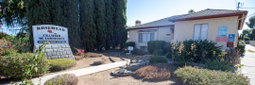
California American Water’s demonstration garden outside of their location in Rosemead, CA. Their garden uses a mix of cacti, succulents, and California native plants to demonstrate water tolerant landscaping.
Address: 3953 Muscatel Avenue, Rosemead, Los Angeles, 91770
|Website|Map

Rudy Ortega Park

A park created in partnership between the Tataviam tribe and San Fernando Parks & Rec. Features a walking trail that winds through open spaces landscaped with drought tolerant plants and trees connecting: a model of a Tataviam tribe village, a Japanese tea house, a Mission style plaza, a small amphitheatre and the restoration of a historic water tower.
Address: 2025 4th Street, San Fernando, CA, 91340
|Website|Map

San Diego’s Old Town Native Demonstration Garden

It possesses beautiful specimens of California Fuschia, San Diego sagebrush, San Diego sunflowers, Honey Mesquite and California Sycamores. There are a couple of bioswales, and really beautiful structures used for framing.
Address: Calhoun St, San Diego, California, 92110
|Website|Map

Chino Hills State Park

Chino Hills State Park covers over 14,000 acres and hosts communities of oak, black walnut, and even the rare Tecate Cypress. The Tecate Cypress is a relicts species from when the climate was much cooler but has survived in spotted areas in California. This population is deeply threatened because of wildfires that are happening too frequently. The Tecate Cypress uses the wildfires to reproduce but grows slowly and when the fires happen too frequently the seedlings are wiped out before they can reproduce.
Address: 4721 Sapphire Road, Chino Hills, CA, 91709

Phone: (800) 777-0369

Galster Wilderness Park Nature Center

Behind the BKK Landfill in West Covina. Coastal sage scrub community is home to endangered bird species such as the California gnatcatcher and the at-risk Burrowing Owl. Home of the largest Southern California Black Walnut community.

LADWP Demonstration Garden

Uses “California Friendly” plants to demonstrate low water use plants gardens do not have to be made up primarily of succulents. These low water usage plants native to California or any of the four matching Mediterranean climate zones of the world: Southwestern Australia, Central Chile, the Western Cape of South Africa, and the Mediterranean Basin
Address: 111 N Hope St, Los Angeles, CA, 90012

Phone: (800) 342-5397

LAX Dunes

302 acre reserve has the largest remaining representation of coastal dune community in Southern California. El Segundo blue butterfly is endemic and lives it’s whole life cycle there. Rare Burrowing Owls have nested there.
Address: 226 Napoleon St, Playa del Ray, CA, 90293

Phone: (888) 301-2527

Los Angeles County Arboretum and Botanical Garden

127 acre garden owned by the county of Los Angeles. Features too numerous to list: oak groves, bamboo forest, succulent and tropical gardens, peacocks. Crescent Farm is a favorite, featuring California native plants and a cob bench. Baldwin lake is a natural sag pond. Adult admission is $15, buy tickets online ahead of time due to covid restrictions. Children under 5 are free.
Address: 301 N Baldwin Ave, Arcadia, CA, 91007

Phone: (626) 821-3222

Paradise Hills Native Garden

This is a native garden built on a landfill, created by volunteers form the Southeastern San Diego chapter of the California Garden Club. It features Engelmann oaks, a pollinator garden, interpretive signage and many native plants.
Address: 6800 Potomac St, San Diego, California, 92139